Galaxy Z Flip8 vs Razr 60 vs Mix Flip 2: Which Cover Display Is Best?
Ohana Magazine – Flip phones are no longer just about folding a large screen into a smaller device. In 2026, the cover display has become a key part of the experience. Samsung Galaxy Z Flip8, Motorola Razr 60, and Xiaomi Mix Flip 2 show how useful this small screen can be. Users can now check messages, control music, follow directions, and access apps without opening the phone. However, each brand takes a different approach. Samsung focuses on AI and a smooth user experience. Motorola keeps things simple and practical. Meanwhile, Xiaomi offers broad app support. Screen size also matters, but it does not tell the whole story. Brightness, refresh rate, software, and ease of use can make a bigger difference. Therefore, comparing these three phones helps reveal which cover display may fit different users best.
Galaxy Z Flip8 Brings a Larger FlexWindow
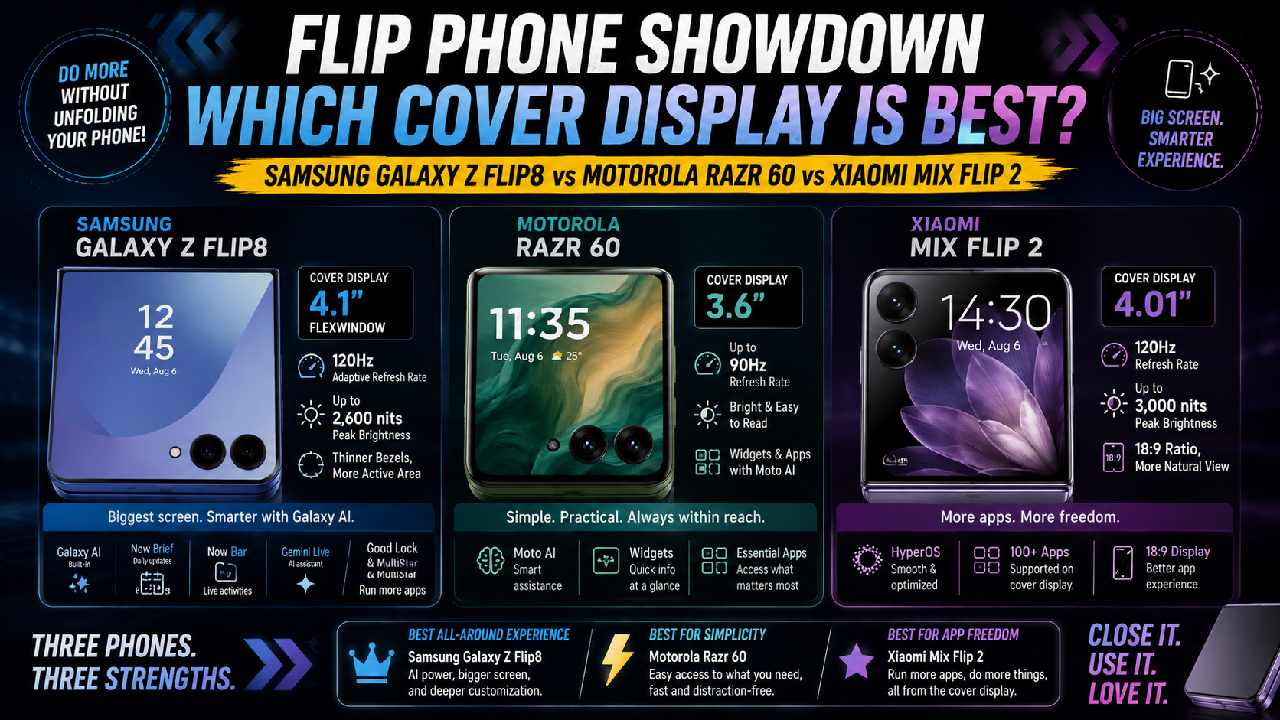
Samsung Galaxy Z Flip8 features a 4.1-inch FlexWindow. It is slightly larger than the 4.01-inch outer display on Xiaomi Mix Flip 2. Meanwhile, Motorola Razr 60 has a smaller 3.6-inch cover screen. The difference may look small on paper, but it can affect daily use. Samsung also uses thinner bezels around its FlexWindow. As a result, the active area feels spacious and easier to navigate. Notifications are simple to scan, while buttons and widgets have enough room for comfortable touch controls. Xiaomi also provides a large display that works well with apps and other content. In contrast, Motorola uses a more compact design. Its screen remains useful for basic tasks despite offering less space. Therefore, screen size alone should not decide the winner. Software design and the way each brand uses the available space are equally important.
Read More : Microsoft Optimizes Windows 11 for 8 GB RAM Laptops as Memory Shortages Reshape the PC Market
Samsung Makes AI Useful on the Cover Screen
Samsung wants FlexWindow to do much more than display notifications. Galaxy Z Flip8 users can reply to messages, control music, check navigation, and take selfies without opening the phone. The rear cameras can also work with the cover display as a preview screen. In addition, Galaxy AI adds several useful tools. Now Brief can show daily information such as schedules, reminders, and weather updates. Now Bar displays ongoing activities, including music and navigation. Gemini Live also brings AI assistance to the external screen. Furthermore, Samsung offers Good Lock and the MultiStar module. These tools let users choose more apps to run on FlexWindow. As a result, the outer screen becomes more than a quick notification panel. It can handle many short daily tasks. This setup may be especially useful for people who want fast access while keeping their phone folded.
Motorola Razr 60 Keeps Things Simple
Motorola Razr 60 follows a simpler path. Its 3.6-inch cover display is smaller than the screens on Samsung and Xiaomi. However, Motorola focuses on easy access to everyday features. Users can open widgets, check key information, and use supported apps without unfolding the device. Moto AI also helps improve several interactions on the outer screen. This approach could appeal to users who value simplicity over a long list of features. A smaller display naturally provides less room for detailed apps or longer messages. Still, good software can make a compact screen useful. Motorola appears to focus on common tasks instead of turning the cover display into a second full smartphone screen. Therefore, the Razr 60 remains an interesting choice for practical users. It may suit people who mainly want quick access to important tools, messages, and information throughout the day.
Read More :The Secret Computer That Helped Win World War II Finally Gets Global Recognition
Xiaomi Mix Flip 2 Offers Wider App Support
Xiaomi takes another approach with the Mix Flip 2. Its 4.01-inch external display offers plenty of space for daily interactions. More importantly, HyperOS supports over 100 apps on the cover screen. This gives users more freedom to perform tasks without opening the phone. The outer display also uses an 18:9 ratio. As a result, supported apps can appear more natural on the compact screen. This approach makes Xiaomi attractive to people who often switch between different applications. Samsung focuses strongly on AI and software integration. Motorola, on the other hand, keeps the experience simple. Xiaomi places greater focus on app access. Still, the number of supported apps does not guarantee a perfect experience. Touch controls, text size, and software design remain important. Even so, the Mix Flip 2 offers an appealing option for users who want greater freedom from the outer screen.
Smooth Screens Matter During Daily Use
Refresh rate and brightness can have a major effect on everyday comfort. Samsung Galaxy Z Flip8 offers an adaptive refresh rate of up to 120 Hz on FlexWindow. This helps scrolling and animations look smooth. Samsung also provides brightness of up to 2,600 nits. Vision Booster can improve screen visibility under changing light conditions. These features become useful when checking the phone outdoors. Motorola Razr 60 supports a refresh rate of up to 90 Hz. That should still feel smooth enough for notifications, widgets, and other basic tasks. Meanwhile, Xiaomi Mix Flip 2 also offers a 120 Hz refresh rate. Therefore, both Samsung and Xiaomi provide strong display performance on paper. However, numbers do not tell the entire story. Fast software and clear menus also affect comfort. A good cover display should remain easy to read and responsive in different situations.
Each Flip Phone Fits a Different User
There is no single cover display that will suit every buyer. Samsung Galaxy Z Flip8 is a strong choice for users who want AI tools and a polished interface. Its Galaxy ecosystem can also benefit people who already use other Samsung products. Good Lock adds more freedom for apps on FlexWindow. In contrast, Motorola Razr 60 may appeal to people who prefer simple access to common features. It keeps the experience practical without making the outer screen feel complicated. Xiaomi Mix Flip 2 targets users who want wider app support. HyperOS allows more than 100 apps to work on its external display. That flexibility can be useful for people who frequently switch between apps. In short, each company has a different priority. Samsung emphasizes AI and balance, Motorola focuses on simplicity, while Xiaomi gives users greater freedom to access apps.
Cover Displays Are Changing Flip Phones
The biggest story is not simply which phone has the largest cover screen. Instead, these devices show how quickly flip phones are changing. External displays once served mainly as small notification panels. Today, users can reply to messages, control music, open apps, and even use AI without unfolding the device. Samsung Galaxy Z Flip8 offers a balanced experience through its 4.1-inch FlexWindow and Galaxy AI tools. Xiaomi Mix Flip 2 stands out with broad app support through HyperOS. Meanwhile, Motorola Razr 60 provides a simpler approach for everyday tasks. These differences give buyers more freedom to choose based on their habits. More importantly, they show where flip phones may be heading next. The best cover display is not always the biggest one. Instead, it should save time, reduce unnecessary steps, and make common smartphone tasks easier throughout the day.