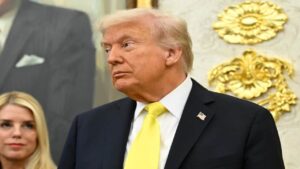
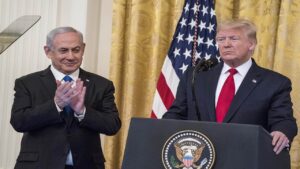
Trump Insists US Control of Greenland Is Non-Negotiable
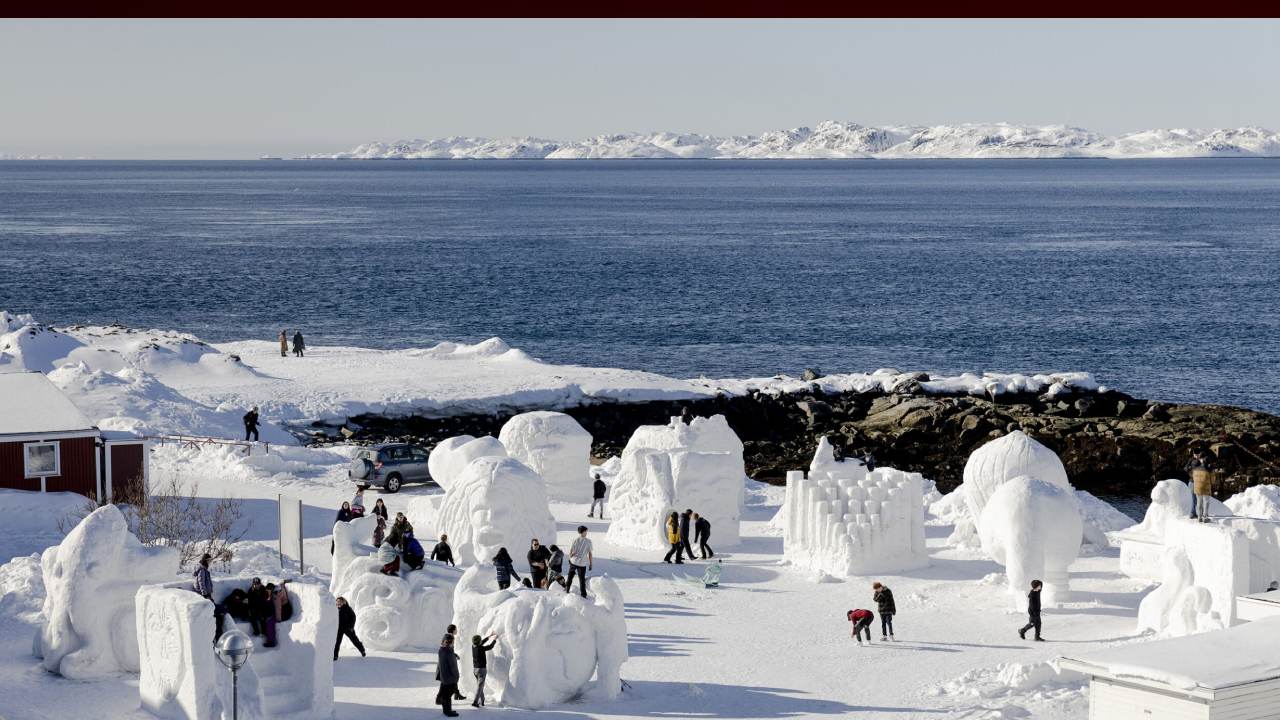
Ohana Magazine – Former US President Donald Trump reignited global debate after declaring that “anything less” than US control of Greenland is “unacceptable.” Speaking through a Truth Social post, Trump framed Greenland as essential to American national security and future defense planning. His words immediately drew attention because they went beyond past rhetoric and carried a sharper tone of urgency. According to Trump, Greenland’s location would significantly strengthen Western defense, particularly within NATO. As a result, his statement landed not only as a policy opinion, but also as a geopolitical warning. While supporters see strategic logic, critics view the remark as dismissive of sovereignty. Either way, the statement underscored Trump’s belief that global security increasingly hinges on control of the Arctic. In today’s tense international climate, such language resonates far beyond domestic politics and into the heart of transatlantic relations.
National Security, NATO, and Trump’s Arctic Argument
Trump justified his position by linking Greenland directly to US and NATO security interests. He argued that NATO would become “far more formidable” if Greenland were under American control. In his view, the Arctic territory plays a key role in missile defense, particularly for what he called the “Golden Dome” system under development by the Pentagon. Moreover, Trump warned that without US ownership, rival powers could step in. He explicitly mentioned Russia and China as potential threats seeking influence in the region. Therefore, he framed the issue as preventive rather than aggressive. This narrative positions the US as a guardian of Western security. However, it also challenges NATO’s collective framework, where sovereignty and cooperation traditionally outweigh unilateral control. The argument highlights how security logic can clash with diplomatic norms, especially when strategic geography becomes a focal point of power competition.
“Read More : Thailand and Cambodia Sign Truce to End Fierce Border Clashes”
Diplomatic Tensions as Talks Begin in Washington
Trump’s remarks came just as US Vice President JD Vance prepared to host a high-level meeting at the White House. The talks involve Denmark’s foreign minister, Greenland’s representative, and US Secretary of State Marco Rubio. Timing matters. Trump’s statement raised stakes ahead of discussions meant to ease tensions. Denmark governs Greenland as a self-governing territory, and Copenhagen has repeatedly rejected any suggestion of a transfer. Consequently, Trump’s language risks overshadowing diplomatic efforts. Instead of quiet negotiation, the issue now sits under a global spotlight. This moment illustrates how political messaging can complicate diplomacy. While meetings continue behind closed doors, public statements shape expectations and harden positions. For allies, the concern is not only what is discussed at the table, but also how power is asserted outside the room.
Greenland’s Leaders Push Back on Sovereignty Claims
Greenland’s Premier Jens-Frederik Nielsen responded firmly to Trump’s assertions. He stated that Greenland does not want to be owned or governed by the United States and intends to remain part of the Kingdom of Denmark. Trump dismissed those remarks bluntly, signaling little regard for local leadership. This exchange revealed a deeper tension between strategic ambition and self-determination. For Greenlanders, identity and autonomy matter as much as security. The comments also raised concerns about how smaller regions navigate pressure from major powers. While Trump framed resistance as “their problem,” critics argue that ignoring local voices undermines democratic principles. The situation highlights a recurring theme in global politics: when strategic value rises, the voices of those who live there often struggle to be heard.
“Read More : Russian General Killed in Moscow Car Bomb Shocks Security Establishment”
Europe Reacts with Firm Warnings and Unity
European leaders responded quickly and decisively to Trump’s comments. French President Emmanuel Macron warned that any attempt to seize Greenland would have “unprecedented” consequences. Similarly, European Commission President Ursula von der Leyen emphasized that Greenland belongs to its people. These responses signaled unity across Europe. Denmark also increased military activity in the Arctic, reinforcing its presence without escalating rhetoric. Together, these actions show Europe’s determination to defend sovereignty through both diplomacy and preparedness. The reaction underscores how sensitive Arctic geopolitics have become. For Europe, Greenland represents not only territory, but also a test of alliance integrity. Trump’s remarks thus triggered a collective response aimed at preserving stability while drawing clear boundaries.
Resources, Climate Change, and the Arctic’s Growing Value
Beyond military concerns, Greenland’s rising importance ties closely to climate change and natural resources. Melting ice has increased access to oil, gas, and rare earth minerals. In addition, new northern shipping routes are becoming viable. While Trump downplayed resource motives publicly, US officials previously acknowledged their significance. These factors explain why Greenland attracts global attention. As the Arctic opens, competition intensifies. Control means influence over trade, technology, and future energy supplies. Therefore, Trump’s insistence reflects broader trends rather than isolated ambition. The challenge lies in balancing opportunity with cooperation. Greenland stands at the crossroads of climate reality and geopolitical rivalry. How nations handle this moment will shape not only Arctic governance, but also the credibility of international norms in an era of rapid change.