Enneagram Types Reveal Relationship Compatibility Through Inner Needs
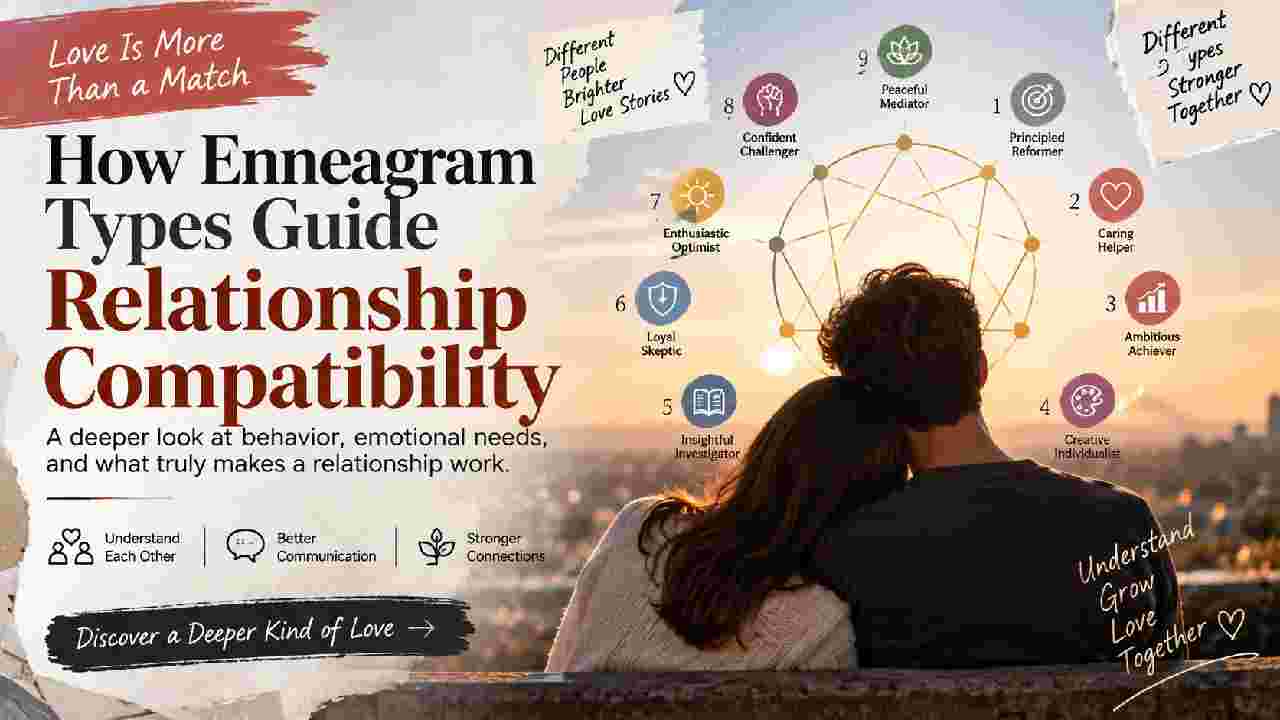
Ohana Magazine – The Enneagram Relationship Compatibility Guide offers couples a way to explore love beyond the familiar question of whether two personalities simply “match.” Instead, the Enneagram looks at behavioral patterns, emotional needs, fears, and motivations that may influence everyday interactions. Two people can share similar interests yet respond very differently when pressure enters their relationship. One partner may seek reassurance, for example, while the other may need quiet space before talking. Recognizing these differences can make confusing moments easier to understand. However, Enneagram types should not become fixed labels that define someone completely. People remain shaped by experience, values, culture, and personal growth. Therefore, the framework works best as a conversation starter. It can encourage partners to become curious about each other rather than quickly judging a difficult response as rejection, selfishness, or a lack of love.
Nine Types Reflect Different Emotional Needs and Motivations
The Enneagram describes nine broad personality patterns, each associated with distinctive motivations and emotional tendencies. Type 1 often values principles and improvement, while Type 2 commonly expresses care through helping others. Type 3 tends to focus on achievement, whereas Type 4 often values emotional depth and individuality. Meanwhile, Type 5 usually seeks knowledge and personal space, and Type 6 may place strong importance on security and trust. Type 7 frequently pursues possibilities and new experiences, while Type 8 often approaches life with confidence and directness. Finally, Type 9 generally values harmony and stability. These descriptions provide a starting point rather than a complete portrait of any individual. More importantly, understanding the motivation behind a behavior may help partners respond with greater empathy. A quiet reaction, for instance, can reflect a need to process emotions rather than emotional distance.
Read More : Lady Gaga Welcomes First Baby With Fiancé Michael Polansky
Two Type 3 Partners May Turn Achievement Into Competition
At first glance, two Type 3 personalities may appear naturally compatible because both often understand ambition, productivity, and the desire to accomplish meaningful goals. Their relationship can feel energetic as they celebrate professional milestones and encourage each other to keep moving forward. Yet similar strengths can also create unexpected tension. The Enneagram Institute notes that a pairing between two Type 3 individuals may become competitive, particularly when partners begin comparing careers, recognition, success, or personal achievements. As a result, encouragement can gradually turn into comparison if both people feel pressure to prove their worth. Healthy communication becomes especially important in this situation. Instead of measuring who has achieved more, partners can acknowledge each other’s efforts without turning every accomplishment into a contest. Emotional intimacy also requires room for vulnerability because relationships need more than visible success. Sometimes, simply admitting insecurity can build deeper trust than another impressive achievement.
Type 3 and Type 8 Can Turn Strong Energy Into Teamwork
A relationship between Type 3 and Type 8 can bring together two personalities that often appreciate action, confidence, and determination. Type 3 may contribute adaptability and a strong drive toward achievement, while Type 8 can bring directness, courage, and protective energy. According to descriptions from The Enneagram Institute, these qualities can allow both personalities to respect each other’s strength and competence. Consequently, the relationship may develop into a highly supportive partnership when both people work toward shared goals. Nevertheless, strong personalities can also clash when each partner wants control over an important decision. The challenge is not necessarily their intensity but how they manage it. Taking turns leading, listening before reacting, and respecting boundaries can prevent productive energy from becoming a power struggle. When neither person feels the need to dominate every situation, their shared determination can become a source of stability rather than tension.
Read More : Meghan Markle Shares Sweet Tribute for Prince Harry’s 42nd Birthday
Different Reactions to Stress Do Not Always Signal Disconnection
Many relationship conflicts begin with a small misunderstanding rather than a major disagreement. Imagine one partner returning home after a difficult day and immediately becoming quiet. The other notices the silence and wants to discuss the problem right away. Without context, one person may feel pressured while the other feels ignored. Enneagram patterns can offer another way to interpret such moments because different personalities often seek different forms of emotional safety. Some people need privacy before they can explain what they feel. Others feel safer when problems are addressed immediately and openly. Therefore, recognizing these tendencies can reduce unnecessary assumptions. Instead of asking, “Why are you shutting me out?” a partner might ask whether the other person needs time or conversation. That small change in approach creates space for honesty. More importantly, it reminds couples that different coping styles do not automatically mean someone cares less about the relationship.
Compatibility Grows Through Communication Rather Than Personality Labels
No Enneagram combination can guarantee a peaceful relationship, just as no pairing automatically creates failure. Compatibility develops through daily choices, including how partners communicate, repair disagreements, respect boundaries, and respond to emotional needs. For this reason, couples should avoid using personality labels as excuses for harmful behavior. Saying “That is simply my type” does not remove responsibility for actions that repeatedly hurt another person. Instead, self-awareness should encourage greater accountability. A partner who recognizes a tendency to withdraw, control, compete, or seek constant reassurance can gradually learn healthier responses. Likewise, understanding another person’s pattern can encourage empathy without requiring someone to tolerate disrespect. The most useful conversations happen when both people remain curious rather than defensive. In that setting, the Enneagram becomes less about predicting romantic success and more about recognizing patterns that couples can discuss, challenge, and reshape together.
Enneagram Insights Can Open More Honest Conversations About Love
Perhaps the most meaningful value of the Enneagram appears when couples use it to ask questions they previously avoided. What makes each person feel secure? How does each partner respond when feeling criticized, overlooked, or uncertain? Which behaviors create closeness, and which ones quietly build distance? Questions like these move beyond personality descriptions and toward lived experience. They also remind couples that emotional needs may change as relationships grow. Someone who once needed independence may later seek more reassurance during a stressful period, while another person may become more comfortable expressing vulnerability over time. Therefore, personality frameworks should remain flexible enough to accommodate growth. The Enneagram can provide useful language for discussing recurring patterns, but partners still write their own relationship story. Trust, empathy, honesty, boundaries, and mutual effort ultimately develop through real interactions, making self-awareness valuable only when it leads to healthier communication.