The Journey of Kebaya Across the Indonesian Archipelago: A Cultural Legacy Shaped by Many Civilizations
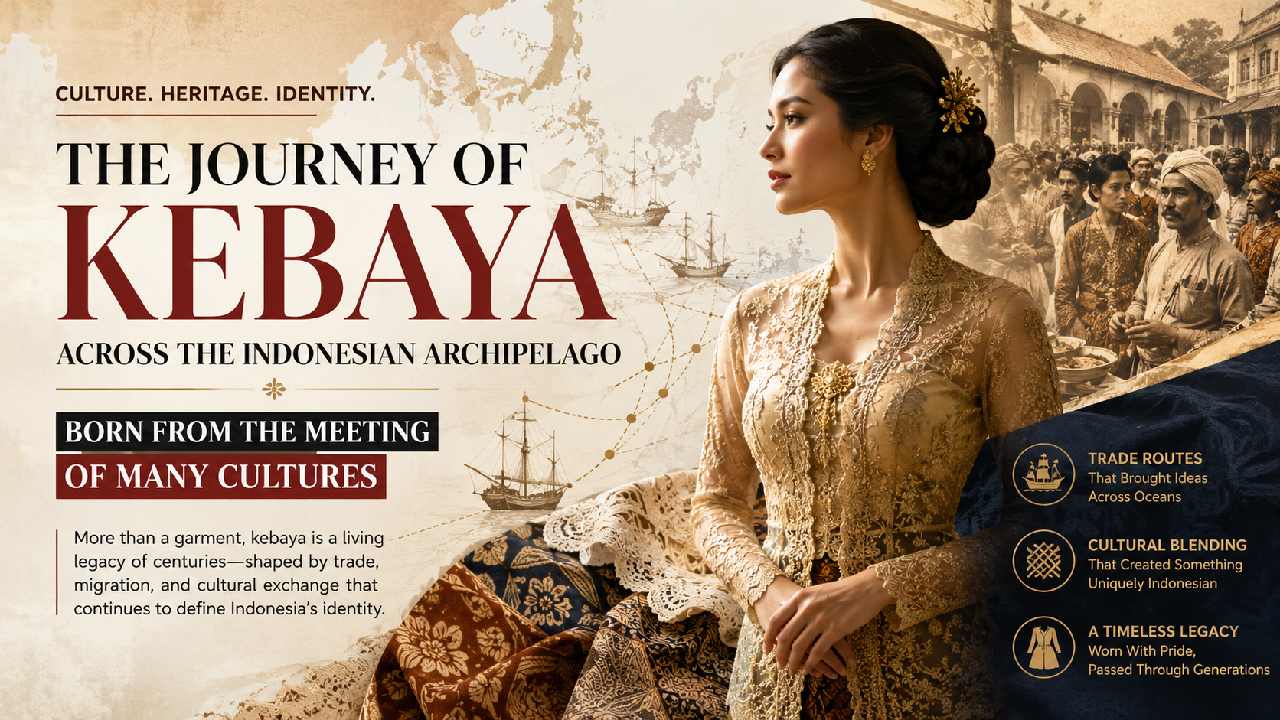
Ohana Magazine – Journey of Kebaya Indonesia is far more than the evolution of a traditional garment. It tells the remarkable story of how different civilizations met, interacted, and influenced one another across the Indonesian archipelago. Today, many people recognize the kebaya as a symbol of Indonesian identity. However, historians and cultural observers explain that its origins cannot be traced to a single culture. Instead, the kebaya emerged through centuries of trade, migration, and cultural exchange involving merchants and travelers from India, China, Persia, Arabia, and later Portugal. As these communities introduced new textiles, tailoring techniques, and clothing styles, local artisans embraced those influences while adapting them to tropical weather and local customs. As a result, the kebaya became a unique cultural expression that represents Indonesia’s ability to transform diversity into a lasting national identity.
Trade Routes Brought More Than Goods to the Archipelago
For centuries, the Indonesian archipelago stood at the center of international maritime trade. Ships carried spices, precious fabrics, ceramics, and valuable commodities across Asia and beyond. However, commerce also transported ideas, traditions, and ways of dressing. According to fashion stylist and creative director Rumi Siddharta, the arrival of foreign merchants introduced new garments, decorative embroidery, weaving methods, and textile craftsmanship that gradually influenced local fashion. Rather than replacing existing traditions, these cultural encounters encouraged creative adaptation. Consequently, local communities blended foreign inspirations with indigenous values and practical needs. Over time, those adaptations evolved into clothing styles that reflected both global influence and local wisdom. This continuous exchange demonstrates that cultural identity often grows stronger through openness instead of isolation, making the kebaya an enduring symbol of Indonesia’s rich multicultural history.
Read More : He Was Told He’d Never Walk Again, Yet Friendship Took Him Across the World
Kebaya Evolved Alongside Indonesia’s Changing Society
Historical evidence suggests that clothing in the Indonesian archipelago changed significantly over time. During the Hindu-Buddhist kingdoms, many ordinary people commonly wore cloth wrapped around the lower body, while upper garments were not always part of everyday attire. Archaeological reliefs, ancient statues, and travel records from foreign visitors provide valuable insight into these early customs. As interactions with traders from India, China, Arabia, and Persia increased, clothing gradually became more structured and modest. New fabrics, sewing techniques, and garment designs inspired local communities to develop upper-body clothing suited to their environment. Eventually, these influences merged with local aesthetics and practical needs, giving birth to the early forms of the kebaya. Therefore, the garment reflects centuries of social transformation rather than a single historical moment or cultural origin.
Local Creativity Turned Global Influences into National Identity
One of the most remarkable aspects of the kebaya is its ability to represent Indonesia while embracing international influences. Rumi Siddharta emphasizes that many people seek to identify the “purest” version of a cultural tradition. Nevertheless, Indonesian culture became distinctive precisely because it welcomed outside ideas and transformed them into something entirely original. Local tailors refined imported concepts by adjusting cuts, choosing breathable fabrics, and incorporating regional embroidery techniques that suited the tropical climate. Consequently, each region developed its own interpretation of the kebaya without losing its essential character. This creative adaptation demonstrates how cultural exchange encourages innovation instead of diminishing authenticity. In many ways, the kebaya symbolizes Indonesia’s long-standing tradition of celebrating diversity while preserving its own unique cultural identity.
Read More :How a Royal Scandal Created One of the World’s Greatest Sacred Masterpieces
Every Region Added Its Own Character to the Kebaya
As the kebaya spread throughout the archipelago, different regions developed distinctive styles that reflected local traditions and artistic preferences. In Java, elegant silhouettes and delicate embroidery became defining characteristics. Meanwhile, Balinese kebaya incorporated vibrant colors and ceremonial elements that complemented religious traditions. Other regions introduced unique lace patterns, woven textiles, and decorative accessories that highlighted local craftsmanship. Although these variations differed in appearance, they shared the same spirit of elegance, modesty, and cultural pride. Furthermore, these regional adaptations illustrate how Indonesian communities embraced diversity while maintaining a shared national heritage. Instead of creating division, local creativity enriched the kebaya’s identity and strengthened its cultural significance across generations, making it one of the country’s most recognizable traditional garments.
The Kebaya Continues to Inspire Modern Fashion
Today, the kebaya remains highly relevant despite rapid changes in the global fashion industry. Contemporary designers continue to reinterpret its timeless silhouette by combining traditional craftsmanship with modern aesthetics. As a result, younger generations increasingly wear the kebaya during weddings, graduation ceremonies, cultural festivals, and national celebrations. At the same time, fashion creators experiment with sustainable fabrics, minimalist cuts, and innovative styling while respecting the garment’s historical roots. This balance between tradition and innovation allows the kebaya to evolve without losing its cultural meaning. Moreover, international audiences have begun recognizing the kebaya as an important representation of Indonesian heritage. Its growing popularity demonstrates that traditional fashion can successfully adapt to modern lifestyles while preserving the stories embedded within every stitch.
Preserving the Kebaya Means Preserving Shared Cultural Memory
The journey of the kebaya reminds Indonesians that cultural heritage is never static. Instead, it evolves through continuous interaction, learning, and adaptation across generations. Every piece of fabric, embroidery pattern, and design detail carries memories of historical encounters that helped shape Indonesia into the diverse nation it is today. Therefore, preserving the kebaya involves more than protecting a traditional outfit. It also means honoring the openness, creativity, and mutual respect that allowed different cultures to contribute to a shared identity. As younger generations continue to appreciate and wear the kebaya, they also inherit the values of tolerance and cultural dialogue embedded within its history. In this way, the kebaya remains not only a beautiful garment but also a living symbol of Indonesia’s multicultural journey.