The Epstein Storm Could Topple a World Leader But It’s Not Trump
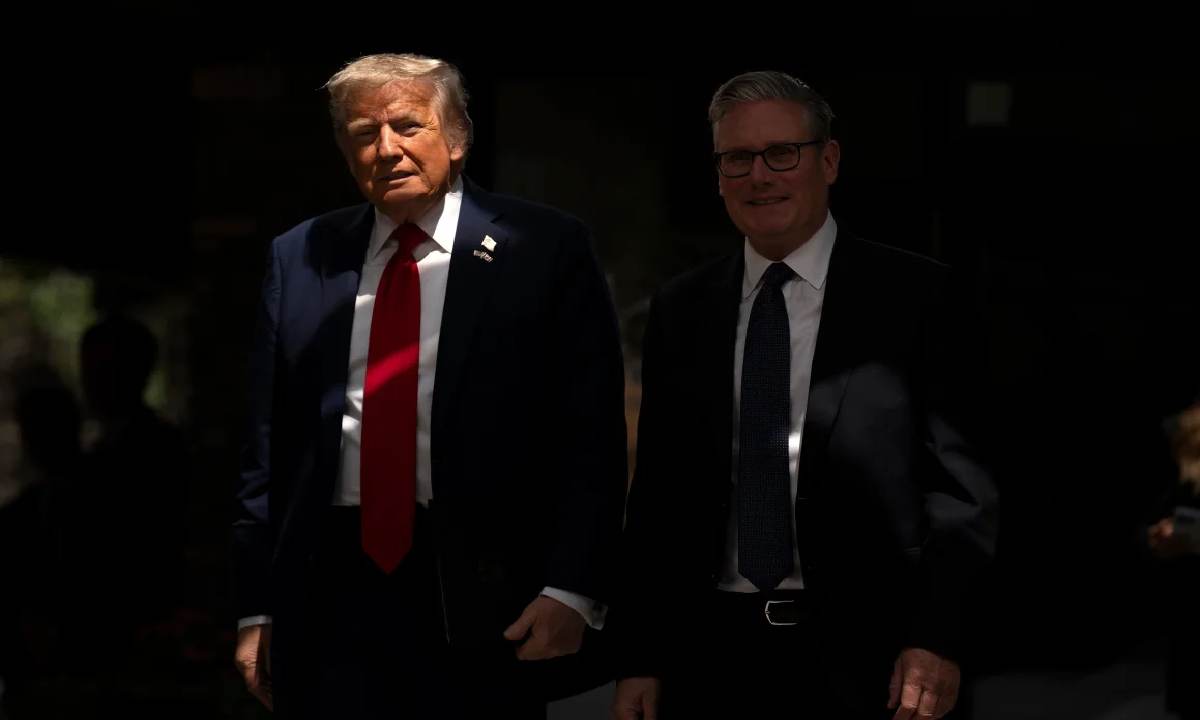
Ohana Magazine – The Epstein scandal has always carried a strange political paradox. It is enormous, global, and morally radioactive, yet it rarely destroys power where you would expect it to. In early 2026, that contradiction has become sharper than ever. While US President Donald Trump appears largely insulated from the latest wave of released files, UK Prime Minister Keir Starmer is facing a political crisis that could end his premiership.
At first, this seems backwards. Trump’s name appears in investigative material, while Starmer was never personally linked to Jeffrey Epstein. However, the fallout is not only about proximity. It is about political systems, institutional accountability, and how quickly a leader’s own party turns fear into a knife. In this moment, the Epstein story is not just a scandal. It is a stress test for democracies.
Keir Starmer Wasn’t Linked to Epstein, Yet He’s in Serious Trouble
Keir Starmer’s vulnerability comes from a different direction. The core issue is not a personal relationship with Epstein. Instead, it is Starmer’s judgement in elevating figures who had ties to Epstein, and his inability to contain the political damage once new details emerged.
The UK has a political culture that treats resignation as a real weapon. So, when a scandal grows, the pressure is immediate. Starmer’s opponents do not need proof of personal wrongdoing. They only need a narrative of weakness, poor judgement, and loss of authority.
From my perspective, that is the brutal reality of Westminster politics. In Britain, perception often becomes destiny. Once a leader looks compromised, their survival can depend on days, not years.
“Read More : Economic Uncertainty Is Redefining Work and Stability Worldwide”
The Mandelson Factor Turned the Epstein Saga into a Labour Crisis
The Starmer crisis is largely fueled by the Peter Mandelson thread. Mandelson’s relationship with Epstein was already controversial, but newly disclosed details reportedly deepened the political damage. As a result, what might have been a contained scandal became a Labour Party emergency.
This is where the Epstein story becomes more than a moral outrage. It becomes a story about power networks, elite access, and the appearance of privileged people protecting each other. In the UK, that theme hits harder because the public already feels exhausted by years of political instability.
Additionally, Mandelson is not just any politician. He represents a decades-long symbol of Labour’s relationship with wealth and influence. Therefore, when his Epstein connection resurfaces, it drags an entire era back into the spotlight.
Starmer’s Apology Shows Accountability, Yet It Also Signals Weakness
Starmer chose a direct approach: apology, public contrition, and vows of accountability. In many democracies, that would be seen as leadership. In Britain, it can also be read as vulnerability, especially when internal party rivals smell blood.
Even so, Starmer’s apology to Epstein’s victims was significant. It positioned the scandal as a moral failure of institutions, not only a political scandal. However, it also created a high bar. Once a prime minister promises justice and integrity, every delay looks like hypocrisy.
This is the trap of modern crisis leadership. You must show empathy. Yet at the same time, you cannot appear powerless. Unfortunately for Starmer, his government already looked unstable before this storm hit.
Trump’s Position Looks Safer Because US Politics Works Differently
Meanwhile, Trump appears to be in a completely different universe. Even with his name appearing in some investigative references, he faces no immediate political danger. There is no sign of legal charges. There is also no sign of institutional momentum that could corner him.
In the US, presidents serve fixed terms. That single structural detail changes everything. Unlike a British prime minister, a president cannot be removed easily by political pressure alone. Additionally, Trump has built a political environment where his party protects him, even when uncomfortable stories resurface.
In other words, the Epstein scandal cannot topple Trump unless institutions act. Right now, they are not acting with the same intensity as in Britain.
“Read More : Winter Olympics 2026: Highlights and Medal Movers in Italy”
The Justice Department Factor Is the Shield Starmer Doesn’t Have
One of the sharpest differences is institutional control. In the US, Trump’s influence over the Justice Department and the Republican-controlled Congress reduces the chances of aggressive scrutiny. That does not automatically mean wrongdoing exists. However, it does mean fewer mechanisms are pushing for deeper investigation.
In the UK, the culture of accountability is more immediate. Parliamentary pressure is relentless. Media pressure is relentless. Party rebellions are common. Consequently, Starmer is being hit from all directions at once.
This is why the same scandal feels louder in London than in Washington. It is not that Britain is “more moral.” It is simply that the machinery of political punishment is faster.
Epstein’s Global Footprint Keeps Growing, Even Years After His Death
Another key detail is how the Epstein scandal keeps expanding across borders. Nearly seven years after Epstein’s death in 2019, new disclosures still reach new countries and new institutions. That global spread is one reason the story refuses to die.
What makes the scandal uniquely damaging is not only what Epstein did. It is the question of who enabled him, protected him, or benefited from proximity to him. That question is endlessly corrosive because it implies rot at the top.
Additionally, the story keeps evolving. Each new file release adds names, messages, and rumors. Even when unverified, the information creates political pressure. In the social media era, perception spreads faster than proof.