Nationwide Anti-ICE Protests Erupt as Minnesota Clashes with Trump Administration
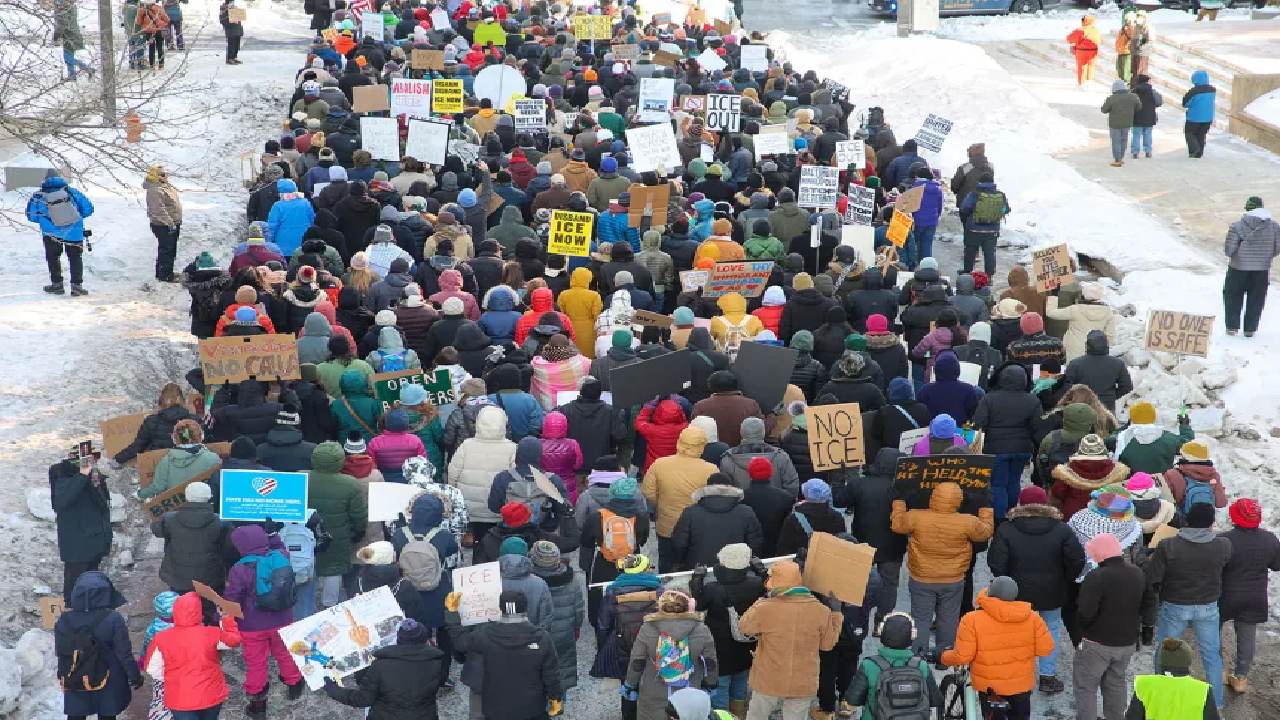
Ohana Magazine – Across the United States, anti-ICE protests are gaining momentum. What began as a local protest in Minnesota quickly spread nationwide. These protests erupted after federal agents killed two Minnesotans. As tensions rise, Minnesota’s state government now faces off with the Trump administration over the actions of ICE.
These protests aren’t merely reactions to tragic deaths; they are a broader outcry against U.S. immigration policies. People from various states, including California, North Carolina, and Maine, have united in the demand for justice and a call to end ICE’s aggressive tactics. Will the government finally heed the call for change?
Minnesota’s Tragedy Sparks Nationwide Protests
The protests started after the deaths of Alex Pretti and Renee Good in Minnesota. Pretti, a student from Green Bay, was killed by federal agents during an ICE operation. His death sparked outrage, leading to protests that quickly spread across Minnesota.
In Minneapolis, protesters gathered on Bde Maka Ska, a frozen lake, to form a human distress signal. They also held memorials for Pretti and others affected by ICE’s tactics. These demonstrations were a call for justice. The protests resonated with people not just in Minnesota, but across the entire nation, highlighting deep frustrations with the immigration system.
“Read More : Egyptian Student Faces Deportation After Pro-Palestinian Protest”
A Nationwide Strike: Uniting for Change
On Friday, the protests grew into a nationwide strike. The rallying cry was simple yet powerful: “No work, no school, no shopping.” This call to action led to school walkouts, canceled classes, and marches in cities across the country, from California to Maine.
The protests were not merely a response to the deaths of Pretti and Good. They reflected a broader demand for change. People across the nation were calling for an end to ICE’s aggressive tactics and the harm they have caused to immigrant communities. The strike united diverse groups, all demanding accountability from the government.
Support from Unexpected Sources: Developers and Politicians Speak Out
As protests intensified, support came from unexpected quarters. Thomas Puha, Communication Director at Remedy Entertainment, criticized the media for focusing too much on negative aspects of the protests. He raised concerns that outlets were sensationalizing the issue to drive clicks, rather than providing balanced reporting.
Michael Douse, Publishing Director at Larian Studios, also weighed in. He emphasized the importance of optimism in both game development and politics. According to Douse, focusing on failure creates a toxic environment, preventing progress and stifling creativity. His remarks resonated with those who believed the national conversation about immigration enforcement needed a shift toward constructive solutions.
The Divide: Minnesota vs. The Trump Administration
The conflict between Minnesota and the federal government has escalated. Governor Tim Walz has openly criticized the administration, stating that it hasn’t followed through on promises of reform. Walz and many other Minnesotans are frustrated by the lack of meaningful action.
Meanwhile, federal officials like Tom Homan, the border czar, have suggested reducing ICE agents in the state. However, no clear plan has emerged. Disagreements over even basic details, such as the number of people detained by ICE, continue to prevent progress. The lack of communication and clarity only deepens the divide.
“Read More : 2026 Silver Price Surge: What It Means for the Global Economy”
The Press Freedom Crisis: Journalists Arrested in Minnesota
The arrests of former CNN anchor Don Lemon and independent journalist Georgia Fort have sparked widespread outrage. Both were detained for covering a protest in St. Paul, Minnesota. The charges against them have raised serious concerns about press freedom.
Lemon and Fort have pledged to fight the charges, asserting their right to report the truth. These arrests have drawn criticism from journalists, free speech advocates, and politicians. Their cases highlight the increasing pressure on the media and the potential dangers faced by journalists trying to report on important issues.
Legal Challenges: Immigrant Rights Groups Take Action
In response to the growing unrest, legal challenges are intensifying. In Boston, immigrant rights advocates have filed a lawsuit against an ICE policy allowing agents to enter homes without a judicial warrant. Critics argue this policy violates the Fourth Amendment, which protects citizens from unreasonable searches.
Meanwhile, in New York, Governor Kathy Hochul has proposed legislation to end cooperation between local police and ICE. The bill targets the 287(g) program, which allows ICE to collaborate with local law enforcement. If passed, the bill could have significant ramifications for ICE’s reach, possibly setting a precedent for other states to follow.
A Movement for Change: The Road Ahead
The protests are showing no signs of slowing down. The deaths of Alex Pretti and Renee Good have sparked a national conversation about immigration enforcement. People across the country are coming together to demand a more just and humane system.
The future of ICE operations in the U.S. remains uncertain. While the road ahead may be long and filled with obstacles, one thing is clear: the momentum behind these protests is growing. The fight for a fairer immigration system has only just begun.