Trump Signals Closer Decision on Massive Iran Strike as Middle East Tensions Intensify
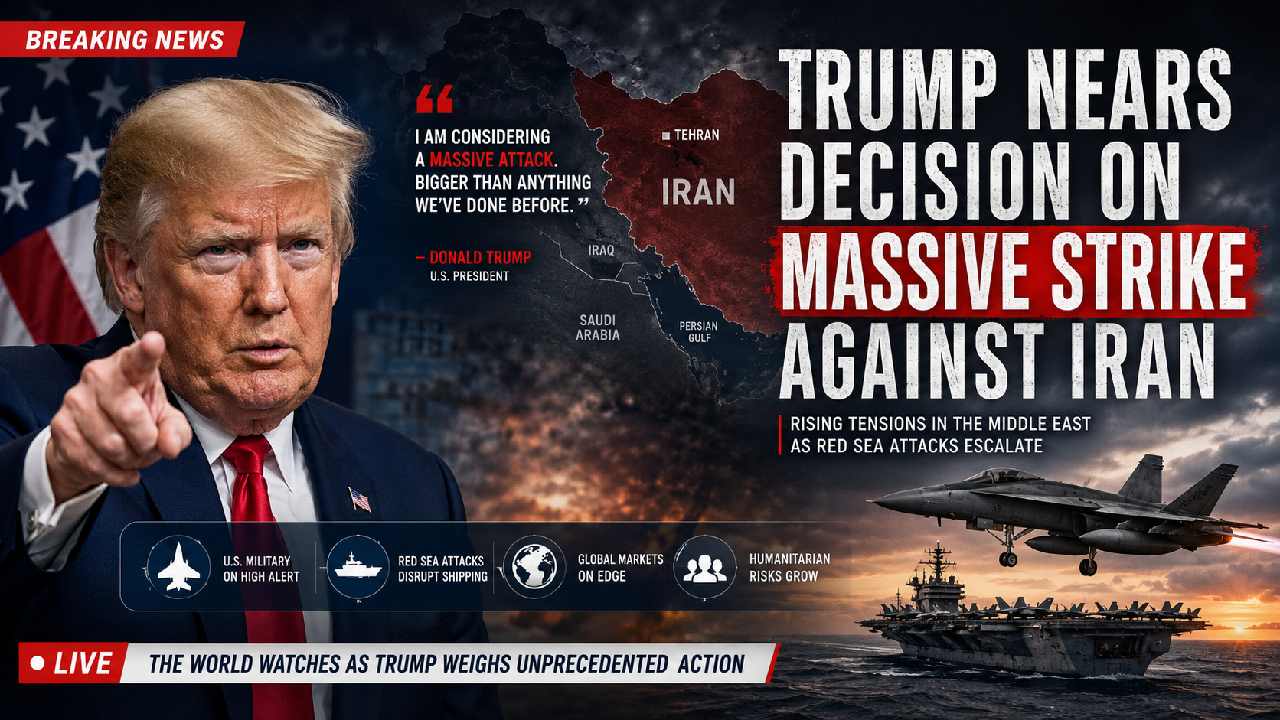
Ohana Magazine – The Trump Iran Strike Decision has become a major global concern. President Donald Trump said he is close to choosing whether the United States will launch a large military attack on Iran. He made the statement during an interview on Thursday. Trump said his team had prepared for a wider operation. He also described the possible strike as larger than any previous action. His words quickly drew attention from leaders, markets, and security experts. At the same time, the U.S. State Department warned American citizens in the Middle East. Officials asked them to prepare for possible flight cancellations and travel delays. As a result, fear grew across the region. Many people now believe Washington may move from warnings to direct military action.
Red Sea Attacks Increase Regional Pressure
Tensions rose further after Houthi forces attacked two Saudi oil tankers in the Red Sea. The group said the ships had ignored a blockade. It named the vessels as Encelia and Layla. Saudi officials later reported a fire on one tanker. However, no deaths or injuries occurred. Even so, the attack caused fresh concern among shipping companies and energy traders. Several tanker operators changed their routes after the incident. These decisions show how fast one attack can affect global trade. The Red Sea carries oil, goods, and containers between Asia, Europe, and the Middle East. Therefore, any threat in this area can raise transport costs. It can also delay deliveries and increase pressure on global supply chains.
Read More : Saudi Prince Found Dead in Luxury
Bab el-Mandeb Blockade Threatens Global Shipping
The Houthi group also announced a blockade of the Bab el-Mandeb Strait. It said ships linked to Saudi Arabia could no longer pass through the narrow route. The group described the move as a response to Saudi actions in Yemen. It also referred to recent strikes near Sanaa. The strait plays a key role in world trade. About twelve percent of global trade moves through this route. A large share of container traffic also uses the same passage. If ships avoid the strait, they may travel around the Cape of Good Hope. That route can add two or three weeks to a journey. As a result, fuel bills may rise. Freight prices may also increase. Consumers could later feel those extra costs.
Washington Weighs Risk and Military Power
The White House now faces a difficult choice. A strong strike could show military power and pressure Iran. However, it could also expand the conflict. U.S. officials must study possible targets, regional reactions, and risks to American forces. They must also consider how Iran and its allies may respond. A wider war could affect Iraq, Syria, Yemen, and the Gulf. It could also pull U.S. partners into a more dangerous conflict. For this reason, military readiness does not guarantee immediate action. Leaders often use strong language to send a warning. Still, Trump’s latest comments sound more serious than earlier threats. Therefore, many governments are preparing for several possible outcomes.
Read More :Berlin Attracts Newcomers as
Oil Markets React to Every New Warning
Oil traders now follow each statement from Washington, Tehran, and the Houthi movement. The region holds major energy routes and production centers. Because of this, even a small military event can move prices. Shipping companies may pay higher insurance fees when danger rises. Tanker owners may also choose longer routes. Those changes can lift transport costs before any oil field suffers damage. Meanwhile, investors often avoid risk during periods of conflict. They may move money into gold, the U.S. dollar, or other safe assets. This reaction can affect stock markets and business confidence. Therefore, the crisis has already reached beyond politics. It now shapes trade, investment, and daily economic planning.
Civilians Face the Greatest Human Cost
Political leaders often speak about strategy, strength, and national security. However, civilians usually carry the heaviest burden. Families across the Middle East now worry about travel, food supplies, fuel prices, and personal safety. A major conflict could close airports and damage roads. It could also disrupt hospitals and aid deliveries. People in Yemen, Syria, Iraq, and Iran already face years of hardship. Another war could make daily life even harder. Refugee movements may also increase if violence spreads. Neighboring countries would then face more pressure on housing, health care, and public services. These human risks remain central, even when political debate focuses on weapons and military plans.
Global Leaders Wait for Trump’s Final Move
World leaders are now waiting for a clear decision from Washington. U.S. allies want to know whether Trump plans a limited strike or a wider campaign. Iran and its partners are also watching closely. They may change their military plans based on every new signal. Diplomats still have time to reduce tension, but that window may be closing. No final military order has entered the public record. Even so, the region remains on high alert. Airlines, shipping firms, and governments continue to prepare for disruption. The next U.S. move could shape relations with Iran for years. It could also change security across the wider Middle East.