Houthi Attacks Put Riyadh on Alert as Residents Seek Shelter
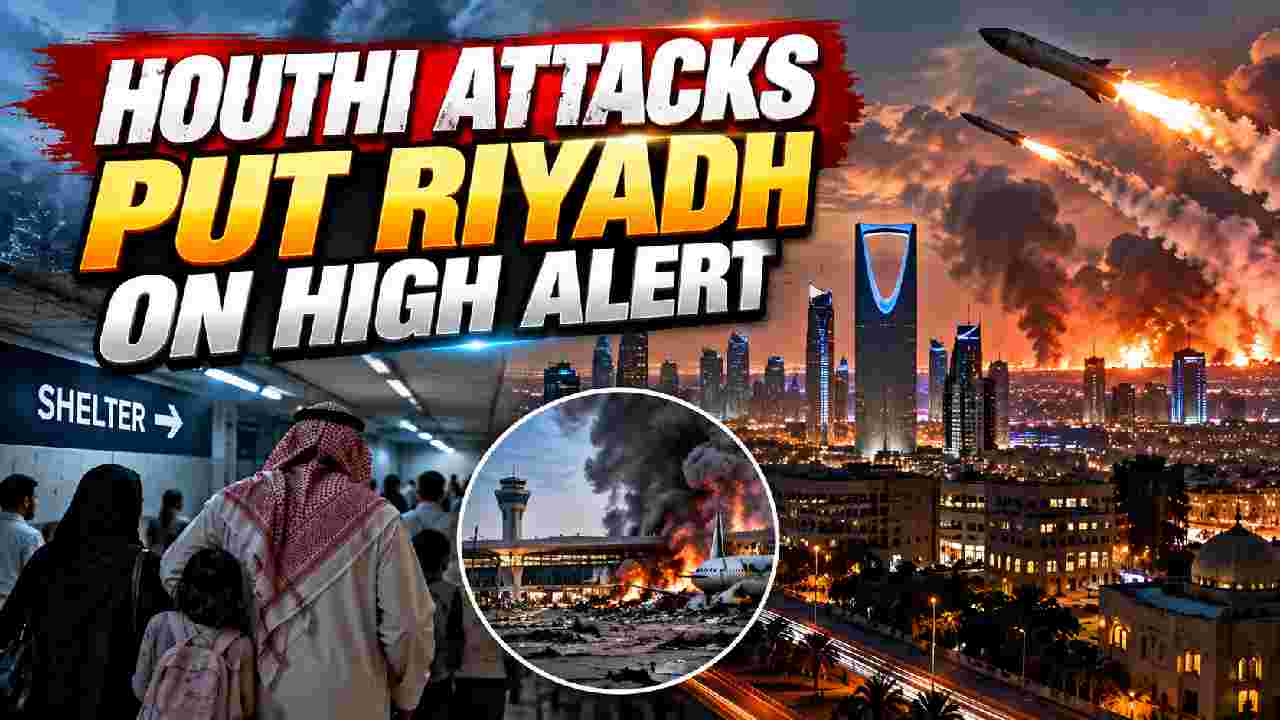
Ohana Magazine – Riyadh faced an unusually tense atmosphere on Thursday as reports of explosions pushed diplomats, workers, and families to seek safer places. According to the supplied report, diplomatic personnel were instructed to remain inside their embassies as a precaution. Meanwhile, businesses in the King Abdullah Financial District reportedly began moving employees away from potentially vulnerable areas. The security measures also reached international schools, where protective protocols were activated. At least one school reportedly moved students into a basement for safety. Although Riyadh has experienced regional security concerns before, the latest escalation brought the conflict much closer to ordinary daily life. As a result, familiar routines suddenly changed. Offices reconsidered operations, parents worried about children at school, and residents listened carefully for further explosions. The Houthi attacks on Riyadh therefore created not only a security challenge but also a deeply personal atmosphere of uncertainty across the Saudi capital.
Houthi Attacks on Riyadh Follow Days of Escalation
The tension did not emerge without warning. According to the source material, the Houthis had announced attacks targeting Riyadh almost daily as fighting intensified between the group and the Saudi-led side supporting Yemen’s government. Consequently, Thursday’s shelter measures reflected growing concern about a broader escalation rather than an isolated incident. The situation has become especially sensitive because civilian infrastructure and major urban areas have entered the security picture. For residents, that shift changes how distant warfare feels. A conflict once associated mainly with Yemen’s front lines can suddenly influence schools, offices, airports, and neighborhoods hundreds of kilometers away. Moreover, the Houthis have demonstrated their willingness to maintain pressure through repeated attacks. Saudi forces, meanwhile, have responded militarily. This cycle raises concerns about further retaliation. Therefore, the Houthi attacks on Riyadh underline how rapidly regional confrontation can affect people far beyond conventional battlefields.
Read More : Iran Warns US and Israel Against New Strikes as Weapons Production Surges
Saudi Airports Become Targets as Civilian Risks Increase
The latest tension followed attacks on two international airports in Saudi Arabia, including King Khalid International Airport in Riyadh and Abha International Airport. According to the report, Saudi authorities said three people were killed and another 36 were injured. The incidents reportedly occurred across Tuesday and Wednesday, adding urgency to security precautions taken afterward. Houthi military spokesman Yahya Saree claimed responsibility for the attack on King Khalid International Airport and said the operation disrupted aviation activity. The group also warned airlines against using Saudi airspace. However, attacks involving airports carry consequences beyond military calculations because these facilities connect millions of civilians with families, workplaces, and destinations around the world. Therefore, disruption can quickly create wider anxiety. For passengers preparing to travel, uncertainty over flight operations becomes personal. At the same time, aviation authorities face the difficult task of maintaining safety while responding to a rapidly changing security environment.
Saudi-Led Coalition Responds With Strikes on Houthi Positions
Saudi Arabia and its allies responded quickly after the airport attacks. According to the supplied source, the Saudi-led coalition destroyed a ballistic missile launcher reportedly used during the operations. It subsequently launched retaliatory strikes against 82 Houthi military targets. Those targets reportedly included missile facilities, command centers, communications systems, and locations where Houthi personnel had gathered. The coalition also condemned attacks against civilian facilities and signaled that such operations would draw a response. Consequently, the military exchange has entered a dangerous cycle in which one strike can trigger another. This pattern creates uncertainty for civilians on both sides of the conflict. While military planners focus on strategic objectives, ordinary families must deal with alarms, interrupted travel, damaged infrastructure, and fear of what might happen next. Furthermore, every escalation increases the possibility of miscalculation. That makes efforts to protect civilian areas increasingly important as the confrontation becomes more intense.
Read More : Scientists Test Solar Panels 10 Meters Underwater in South China Sea
Schools and Offices Adjust as Security Concerns Grow
Behind the geopolitical headlines, the most immediate story is how ordinary people adapt when danger suddenly feels close. Workers in Riyadh’s business district reportedly faced evacuation measures, while international schools introduced emergency procedures. For parents, such precautions can transform an ordinary school day into an anxious wait for updates. Likewise, employees who normally focus on meetings and deadlines may suddenly need to think about evacuation routes and shelter locations. These moments show why the human consequences of conflict cannot be measured only through military statistics. Moreover, repeated alerts can create psychological pressure even when no direct strike reaches a particular neighborhood. People begin watching the sky, checking messages, and following security announcements more closely. Nevertheless, precautionary measures can reduce risk when authorities and institutions communicate clearly. As the Houthi attacks on Riyadh intensify concerns, preparedness has become part of daily life for communities that previously felt relatively distant from Yemen’s battlefield.
Yemen Conflict Spills Further Across Regional Borders
The developments in Riyadh highlight how Yemen’s conflict can extend far beyond its original front lines. The Houthis have increased military pressure, while the Saudi-led coalition continues supporting Yemen’s internationally recognized government. At the same time, strikes against Saudi territory bring another layer of regional risk because retaliation can deepen an already volatile confrontation. Airports, energy facilities, missile sites, and command centers have become increasingly important within this cycle. However, civilians remain the people most exposed to its unpredictable consequences. A missile attack can disrupt flights, close workplaces, frighten children, and force families to reconsider routines within minutes. Similarly, retaliatory strikes can create new dangers for communities in Yemen. Therefore, the latest escalation should be understood not merely through military capability but also through its human impact. The Houthi attacks on Riyadh demonstrate how quickly a regional conflict can cross borders and reshape everyday life.
Riyadh Faces Uncertainty as Residents Await What Comes Next
For now, Riyadh remains under heightened attention as residents, diplomatic missions, businesses, and schools watch for further developments. The shelter instructions described in the report reveal how seriously institutions treated the threat after explosions were heard around the Saudi capital. Meanwhile, previous attacks on airports and the subsequent Saudi-led retaliation have increased concerns that the confrontation could continue. No one living through such uncertainty can easily predict whether the next day will bring calm or another emergency warning. Still, clear information, practical security measures, and protection of civilians remain essential whenever military tensions rise. The situation also demonstrates how quickly normal urban life can change when regional warfare reaches major cities. For families, safety becomes more important than routine. For governments, preventing further escalation becomes increasingly urgent. Ultimately, the coming developments will determine whether Riyadh’s tense days represent a temporary security crisis or the beginning of a more dangerous phase.