Alibaba Launches Qwen4-Max AI, Turning Simple Text Prompts Into Playable 3D Games
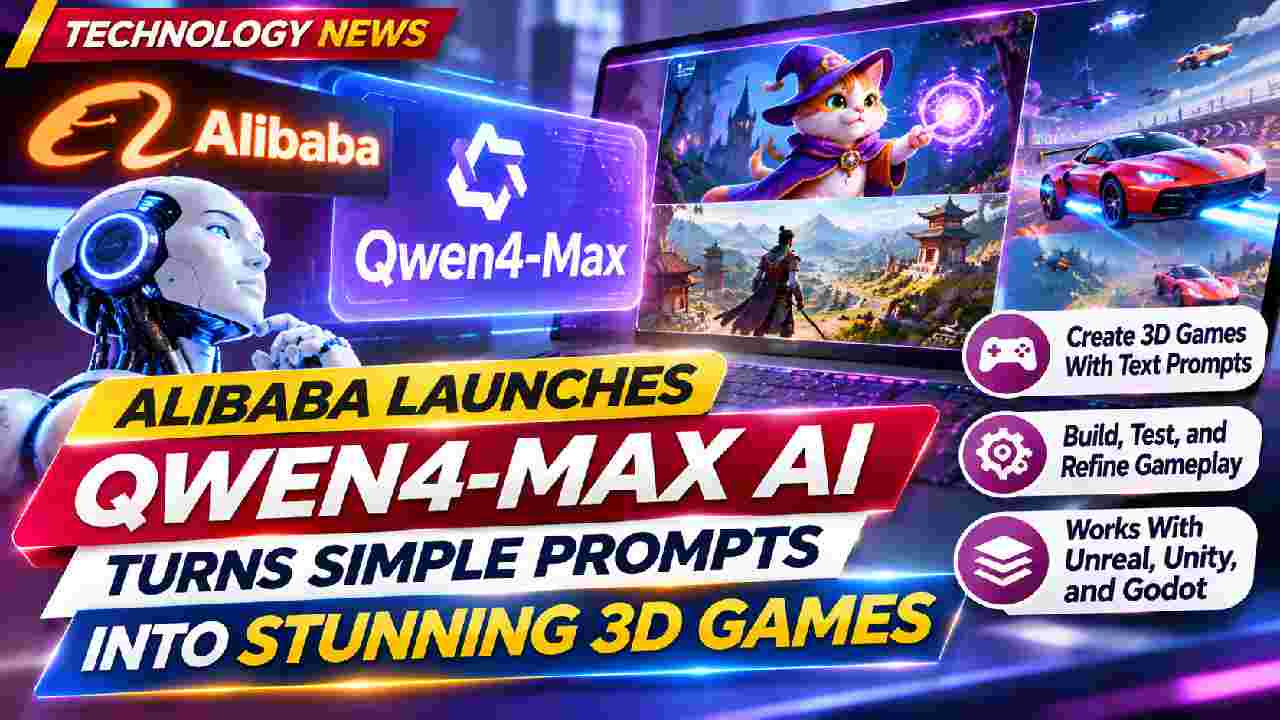
Ohana Magazine – Alibaba has introduced Qwen4-Max AI, bringing a new approach to creating interactive three-dimensional games. The company officially released the artificial intelligence model on November 16, 2026. According to a Kompas.com report published the following day, the technology allows users to generate 3D games through detailed text instructions. As a result, game development could become more accessible to people without extensive programming experience. Instead of manually designing every element, users can describe their ideas through prompts. The model then helps create environments, gameplay mechanics, visual assets, and interactive features. Furthermore, Alibaba demonstrated several projects to highlight the technology’s capabilities. These examples show how artificial intelligence can support creative development beyond traditional chatbot conversations. However, the quality of generated games still depends on instructions, testing, and refinement. For aspiring developers, Qwen4-Max represents an interesting opportunity to explore game creation through a more conversational workflow.
Three Demonstration Games Showcase the Creative Potential of Qwen4-Max
Alibaba introduced three demonstration games to illustrate what Qwen4-Max AI can produce from text prompts. The first title, Meow of Magic, follows a magical cat capable of casting spells and fighting waves of enemies. Players can also select ability upgrades before confronting challenging bosses. Meanwhile, Yun Guan Xing offers a different experience through an adventure inspired by historical Chinese landscapes. Its setting encourages exploration while introducing players to an environment influenced by China’s dynastic periods. The third demonstration, Flying Racer, focuses on an unusual racing concept featuring cars that can fly. Together, these examples demonstrate the variety of genres supported by the model. Furthermore, the showcased games feature three-dimensional environments and animations that appear relatively smooth in the demonstrations. However, promotional footage alone cannot establish how consistently the technology performs across complex projects. Nevertheless, these examples suggest that AI-assisted game creation may become increasingly flexible for developers and creative enthusiasts.
Read More : TGP vs TDP Differences: Laptop and PC Power Guide
Text Prompts Become the Starting Point for Building Interactive Games
One of the most interesting features of Qwen4-Max AI is its text-based development process. Users begin by describing the game they want to create through a detailed prompt. For example, someone might request a fantasy adventure featuring a magical character, dangerous enemies, and several challenging levels. The instructions can also describe the environment, movement controls, camera behavior, and visual style. Subsequently, the model uses those requirements to help construct the requested game. According to Alibaba’s demonstration, Qwen4-Max can generate arenas, gameplay systems, assets, interfaces, and visual effects. Therefore, users may spend less time assembling basic components manually. However, clear instructions remain essential for achieving results that match the original concept. Vague prompts can leave important design decisions unresolved. Furthermore, game development involves balancing mechanics, performance, and player experience. Consequently, effective prompt writing becomes an important skill when working with AI-powered development tools.
Qwen4-Max Supports Game Development Through Popular Creation Engines
Alibaba has indicated that Qwen4-Max AI can work with established game development software. The company mentioned Unreal Engine, Unity, and Godot as examples of tools that can support the creation process. These platforms already provide developers with environments for building interactive experiences. Therefore, combining AI-generated instructions and assets with existing engines could streamline certain development tasks. For example, developers may use AI assistance to establish an initial game structure before refining individual components. Furthermore, established engines offer systems for rendering, physics, animation, and user interaction. However, the source report does not establish that every feature works identically across all three platforms. Compatibility, setup requirements, and project complexity may influence the actual workflow. Nevertheless, support for familiar development tools could make the technology more relevant to existing creators. Instead of replacing traditional game engines, Qwen4-Max appears positioned to help users work with them through a more accessible process.
Read More :Apple Breaks Steve Jobs’ Old Rule With First Touchscreen MacBook Pro
Automated Testing Helps Qwen4-Max Refine Gameplay and Camera Movement
Creating a playable game requires more than generating attractive environments and characters. Developers must also ensure that movement, camera controls, and gameplay systems function properly. Interestingly, Alibaba says Qwen4-Max AI can run generated games to evaluate their results. This testing stage allows the model to identify areas that may need further adjustment. For example, it can modify how the camera follows a character during movement. Additionally, the system can refine animations or change the pace of gameplay. These improvements are important because small technical problems can significantly affect the player’s experience. However, automated testing does not necessarily eliminate the need for human evaluation. Players may notice issues involving difficulty, storytelling, or overall enjoyment that require creative judgment. Therefore, AI-generated testing should be viewed as a development aid rather than a guarantee of flawless performance. Even so, iterative improvements could help creators move more efficiently from an initial concept toward a functional game.
AI-Powered Game Creation Could Open New Opportunities for Beginners
For many aspiring game creators, programming knowledge and technical complexity represent major barriers. Building a three-dimensional game traditionally requires familiarity with development tools, design principles, and testing procedures. However, Qwen4-Max AI introduces a workflow that begins with ordinary language. This approach could help beginners explore ideas before mastering every technical detail. For instance, students might experiment with simple adventure games while learning how interactive systems work. Meanwhile, independent developers could use generated prototypes to evaluate concepts more quickly. Furthermore, smaller creative teams may benefit from assistance with repetitive development tasks. Nevertheless, creating a polished commercial game still requires careful planning, quality assurance, and artistic direction. Intellectual property rights and the licensing of generated assets also deserve attention. Therefore, the technology should not be interpreted as removing every challenge associated with game production. Instead, its greatest potential may involve making early experimentation more approachable for a wider creative community.
Alibaba’s Qwen4-Max Highlights the Expanding Role of Generative AI
The introduction of Qwen4-Max AI reflects a broader shift in how artificial intelligence supports digital creativity. Previously, many users associated generative AI primarily with writing, image creation, and conversational assistance. Now, Alibaba’s demonstrations show how similar technology can contribute to interactive three-dimensional experiences. Furthermore, the ability to generate and refine gameplay suggests a more involved relationship between users and AI systems. Rather than receiving only written suggestions, creators can potentially develop functional prototypes through repeated instructions. However, important questions remain about reliability, performance, and the complexity of games the model can produce. Real-world adoption will depend on how effectively developers integrate the technology into existing workflows. Meanwhile, human creativity remains essential for developing memorable stories, enjoyable mechanics, and distinctive visual identities. For the gaming industry, Qwen4-Max offers another example of how AI tools may reshape creative production. Its long-term influence will become clearer as more developers test its practical capabilities.