Singapore Warns Seven Companies as Indonesia Wildfire Haze Worsens
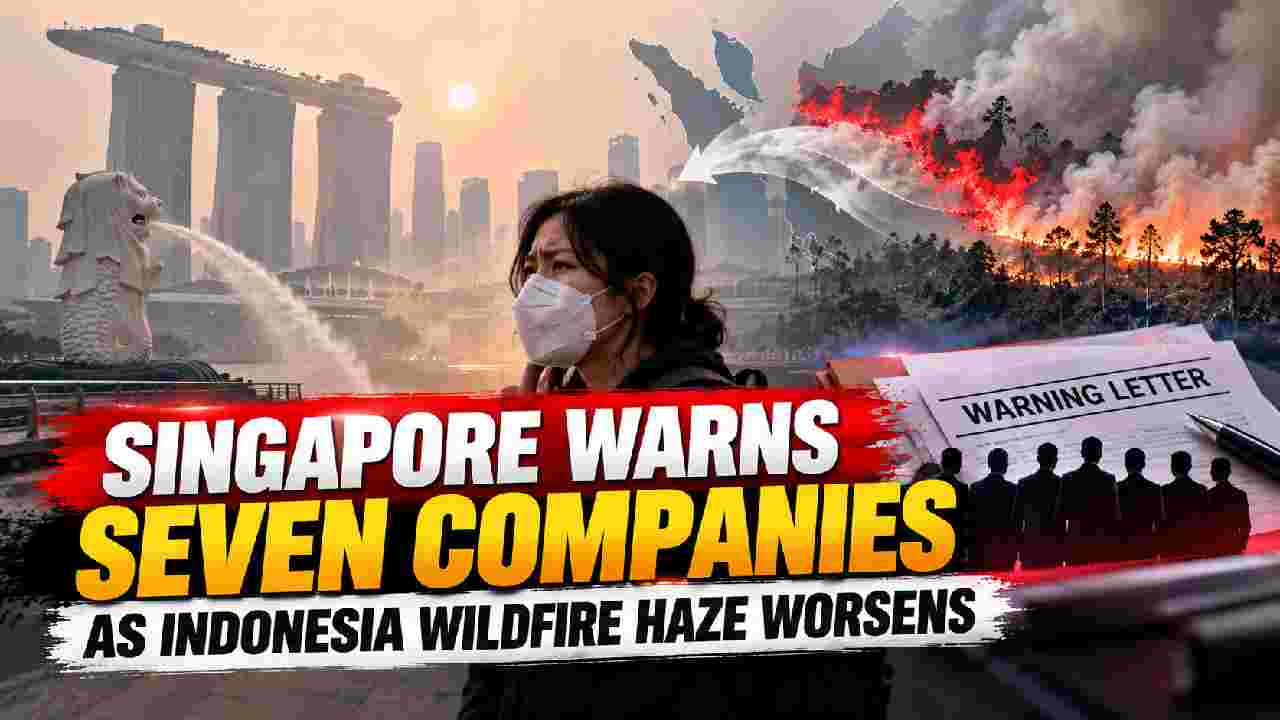
Ohana Magazine – Singapore has stepped up its response as smoke from Indonesia continues to affect the region. The government identified seven companies that may have links to forest and land fires in Indonesia. Singapore plans to seek action from these companies under its Transboundary Haze Pollution Act, or THPA. Minister for Sustainability and the Environment Grace Fu announced the move on Friday, October 16, 2026. For several weeks, smoke from fires in Indonesia has affected Singapore and Malaysia. Dry weather has also made the situation harder to control. However, Singapore has not declared the seven companies guilty of breaking the law. Authorities still need to examine the available evidence. As Indonesia wildfire haze worsens, Singapore wants faster action to stop fires from spreading. The case also shows how a local environmental disaster can quickly become a serious problem for several countries.
Satellite Data Helps Track Smoke from Indonesia
Singapore’s National Environment Agency, or NEA, used several tools to study the haze. The agency monitored hotspots, weather conditions, maps, and satellite images. These tools helped officials follow smoke as it moved across the region. According to NEA, the data showed possible links between several fires and concession areas connected to the seven companies. Officials also found signs that smoke from those areas moved toward Singapore. Still, satellite images alone cannot prove who caused a fire. Investigators need more evidence before they can determine legal responsibility. They may also need to study how each fire started and how companies responded. Even so, satellite monitoring gives authorities valuable information during a fast-moving crisis. It can show where fires are active and where smoke may travel next. As Indonesia wildfire haze worsens, this information can help officials respond faster and protect communities from unhealthy air.
Read More : Riyadh Airport Struggles to Recover as Houthi Missiles Intensify Saudi Crisis
Seven Companies Receive Notices from Singapore
Singapore has sent formal notices to the seven companies under the THPA. Through these notices, authorities asked the companies to take steps to control fires linked to areas under review. They must send personnel when needed and help prevent flames from spreading. Singapore also asked them to avoid burning activities. In addition, the companies must provide plans for fire control and prevention. However, the notices do not prove that any company caused the haze. Authorities still need to investigate the case and review the evidence. NEA may take legal action if investigators later find enough proof of responsibility. This careful process matters because public concern can grow quickly during a haze crisis. People want answers, but authorities must base legal action on clear facts. Meanwhile, stopping active fires remains the main priority. Quick action can reduce smoke and lower the risk of further pollution across national borders.
Dry Weather Makes Wildfires Harder to Control
Very dry conditions have made the fires harder to contain. El Niño has contributed to a severe dry season across parts of the region. As a result, vegetation can catch fire more easily. Strong winds can then push flames into new areas. Fire crews face even greater challenges when fires burn far from roads or reliable water sources. Peatland fires can also remain active below the surface for long periods. In some cases, visible flames disappear while heat continues underground. These conditions make full fire control difficult and slow. Meanwhile, changing winds can carry smoke far from the original fire zones. Cities hundreds of kilometres away may then experience poor air quality. As Indonesia wildfire haze worsens, authorities must deal with both fire and smoke. They need to stop flames on the ground while limiting pollution that can travel toward Singapore, Malaysia, and other nearby areas.
Read More : Iran Warns US and Israel Against New Strikes as Weapons Production Surges
Haze Becomes a Regional Environmental Problem
For residents, haze can quickly change everyday life. Thick smoke can reduce visibility and make outdoor activities uncomfortable. It can also raise concern among families when air quality starts to fall. Singapore and Malaysia have experienced smoke from Indonesia’s fires for several weeks. The situation shows why haze is not only a domestic issue. Wind can carry pollution across national borders without warning. Therefore, governments need to work together when large fires threaten the wider region. Singapore’s latest action shows one way a country can respond through its own environmental laws. At the same time, Indonesia faces the difficult task of controlling fires across large and sometimes remote areas. Companies and local communities also have important roles in prevention. As Indonesia wildfire haze worsens, cooperation becomes more important. Faster detection and stronger fire control can help stop a local emergency from growing into a wider regional crisis.
Legal Responsibility Requires Clear Evidence
Singapore’s THPA gives authorities a way to respond to serious cross-border haze. However, proving responsibility for a wildfire can be difficult. Investigators must understand where a fire started and how it spread. They also need to know who controlled the land at the time. In addition, authorities may examine whether companies took reasonable steps to prevent or stop the fire. Satellite images and hotspot data can support an investigation, but they do not always tell the full story. For this reason, Singapore has not declared the seven companies responsible for the haze. The government has instead asked them to take action and provide information. Legal measures could follow if investigators later find enough evidence. This approach protects the investigation while keeping pressure on companies to respond. It also shows why strong monitoring and clear records matter when governments investigate environmental damage that crosses international borders.
Southeast Asia Faces Another Haze Challenge
The latest haze crisis has once again tested environmental cooperation in Southeast Asia. Indonesia faces the immediate challenge of controlling forest and land fires. Meanwhile, Singapore and Malaysia must deal with smoke that crosses their borders. Singapore’s notices to seven companies add another layer to the response. Yet legal action alone cannot prevent future haze. Governments need faster hotspot detection and stronger firefighting systems. Companies should also monitor concession areas and act quickly when fires appear. Local communities can support early reporting and prevention efforts on the ground. At the same time, regional cooperation can improve the exchange of weather data and fire information. These steps matter because dry conditions can turn small fires into large emergencies very quickly. As Indonesia wildfire haze worsens, the current crisis offers another warning. Effective prevention requires action before thick smoke reaches cities and begins affecting millions of people across the region.