Acer Predator Atlas 7 Brings Intel Arc G3 Power to Handheld Gaming
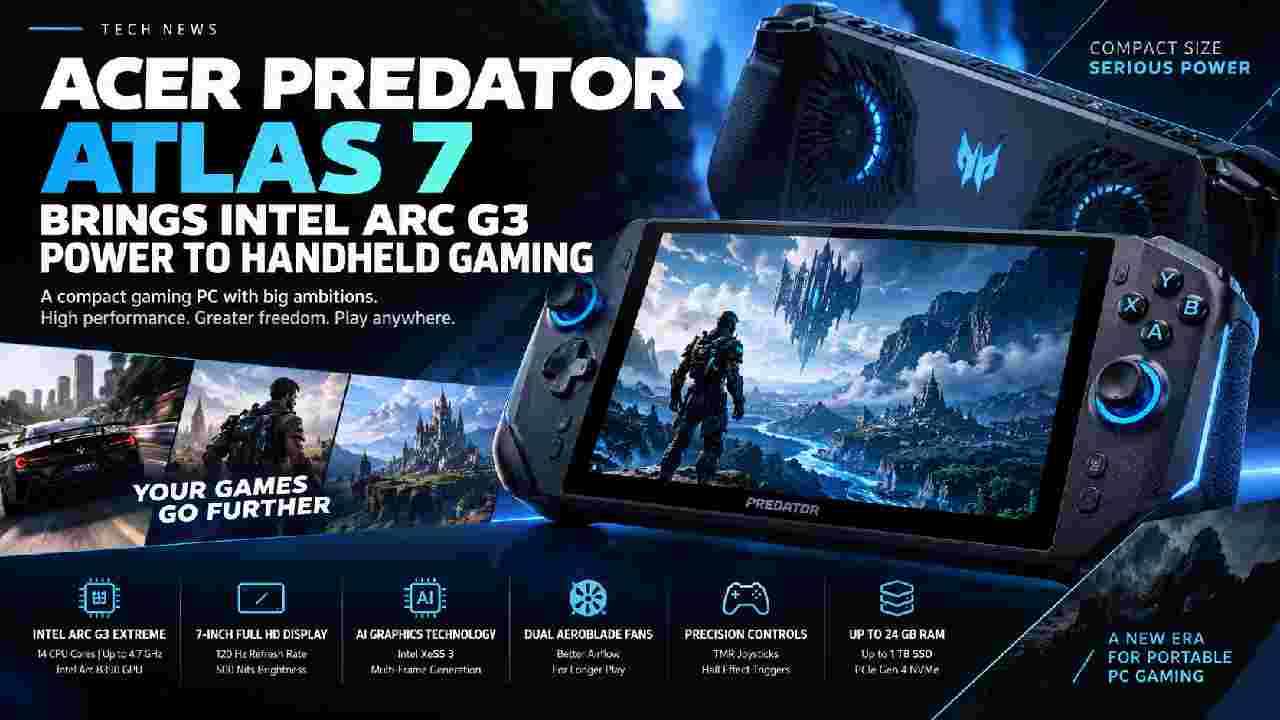
Ohana Magazine – The Acer Predator Atlas 7 has officially joined the growing handheld gaming PC market. Acer introduced the device during IFA 2026 in Berlin, Germany. It arrives as another model in the Predator Atlas family. However, this version focuses on a smaller seven-inch design. Acer combines compact dimensions with powerful Intel hardware and gaming-focused controls. As a result, players can carry a Windows gaming machine without bringing a full laptop. This idea has become more attractive as handheld PCs improve each year. Many gamers now want strong performance while traveling, relaxing at home, or playing away from a desk. Therefore, the Atlas 7 enters a market with rising expectations. Acer is not only selling portability. It is also promising smooth graphics, responsive controls, and enough power for modern PC games in a device that can easily fit inside a backpack.
Intel Arc G3 Extreme Powers the Compact Gaming Machine
At the center of the Acer Predator Atlas 7 is the Intel Arc G3 Extreme System-on-Chip. The chip includes 14 CPU cores and reaches speeds of up to 4.7 GHz. Graphics are handled by an Intel Arc B390 GPU based on the Xe3 architecture. The GPU includes 12 graphics cores. Acer pairs this hardware with up to 24 GB of LPDDR5X memory. The memory runs at speeds of 7,467 MT/s. Storage can reach 1 TB through a PCIe Gen 4 NVMe SSD. These specifications give the device strong potential for a portable gaming system. Players should have enough memory for demanding games and regular Windows tasks. However, specifications alone do not guarantee a great experience. Battery life, heat, and game optimization will also matter. Even so, Acer clearly wants the Atlas 7 to compete as a serious handheld PC rather than a simple gaming accessory.
Read More : NVIDIA Invests in MediaTek as AI Chip Competition Intensifies
AI Graphics Features Aim to Improve Frame Rates
Acer also uses modern graphics tools to help the Atlas 7 deliver smoother gameplay. The Intel Arc G3 Extreme platform supports Intel XeSS 3. It also includes Multi-Frame Generation, commonly known as MFG. These technologies can increase frame rates by using AI-assisted rendering and upscaling. Therefore, games may appear smoother without placing all the pressure on raw hardware power. This approach is especially useful in handheld devices. Small gaming systems must carefully manage heat, battery use, and performance. AI-based graphics features can help create a better balance between those areas. However, results will depend on each game’s support and settings. Some titles may benefit more than others. Still, these features could become important as PC games demand more graphics power. For the Atlas 7, Intel’s AI tools may help the compact device handle demanding games while keeping performance more efficient during longer sessions.
Dual AeroBlade Fans Help Control Heat
Powerful components produce heat, especially inside a small gaming device. Acer addresses this issue with its Predator AeroBlade cooling system. The Acer Predator Atlas 7 uses two internal fans to manage temperature. Each fan has 89 thin metal blades. Every blade measures around 0.1 mm in thickness. Acer says this design can improve airflow by up to 10 percent. Better airflow may help the processor maintain stable performance during long gaming sessions. Cooling also affects player comfort because users hold the device in their hands. Excessive heat could make long sessions unpleasant. In addition, high temperatures can force a processor to reduce its speed. This process can lower gaming performance. Therefore, cooling is an important part of any handheld PC. Acer’s dual-fan design shows that the company is paying attention to sustained performance, not only impressive specifications listed on a product sheet.
Read More : Apple M6 and M5 Ultra Bring a Major Leap for AI Computing
Seven-Inch Full HD Display Offers a 120 Hz Refresh Rate
The Atlas 7 uses a seven-inch display with Full HD resolution. The screen produces 1,920 x 1,080 pixels and uses a 16:9 aspect ratio. More importantly, it supports a refresh rate of up to 120 Hz. This feature can make fast games appear smoother when the hardware delivers enough frames. Maximum brightness reaches 500 nits. Therefore, the display should remain clear in many indoor environments. Acer also includes 10-point multi-touch support. Users can navigate Windows, apps, and compatible games directly through the screen. For added protection, the company uses Corning Gorilla Glass Victus. A DXC coating also helps reduce reflections. These details can improve comfort because handheld screens sit close to the user’s eyes. Sharp resolution and smooth motion can make a noticeable difference during long sessions. Acer appears to have designed the display for both gaming and everyday Windows use.
Precision Controls Give Players More Flexibility
A handheld gaming PC needs accurate controls as much as powerful hardware. Acer equips the Atlas 7 with TMR joysticks, which use Tunneling Magnetoresistance technology. These joysticks are designed to provide accurate movement and consistent input. The device also includes Hall Effect analog triggers. They use magnetic sensing instead of relying only on traditional physical contact. As a result, the triggers can offer more reliable pressure detection over time. This setup could help players in racing games, shooters, and action titles. Acer also adds several function buttons to the rear of the device. Programmable macro buttons give users more control over shortcuts and game commands. These features make the Atlas 7 feel closer to a dedicated console controller. At the same time, it still runs Windows. That combination gives users more flexibility when switching between games, applications, and other tasks.
Predator Atlas 7 Reflects the Growth of Handheld Gaming PCs
The Acer Predator Atlas 7 shows how quickly handheld gaming PCs are becoming more advanced. These devices are no longer simple alternatives to gaming laptops. Instead, they now combine fast processors, AI graphics, strong cooling, and high-refresh-rate displays. Acer brings all of those ideas together in a compact seven-inch body. The Intel Arc G3 Extreme chip provides the main processing power. Meanwhile, XeSS 3 and Multi-Frame Generation could help demanding games run more smoothly. The 120 Hz display also supports a faster visual experience. TMR joysticks and Hall Effect triggers add more precise controls. However, several important questions remain. Buyers will still want to know about battery life, real-world performance, pricing, and availability. Those details will strongly affect its appeal. Even so, the Atlas 7 represents another clear sign that portable PC gaming is becoming a major part of the wider gaming market.