MotoGP Rider Radio Could Transform Racing and Team Communication in 2027
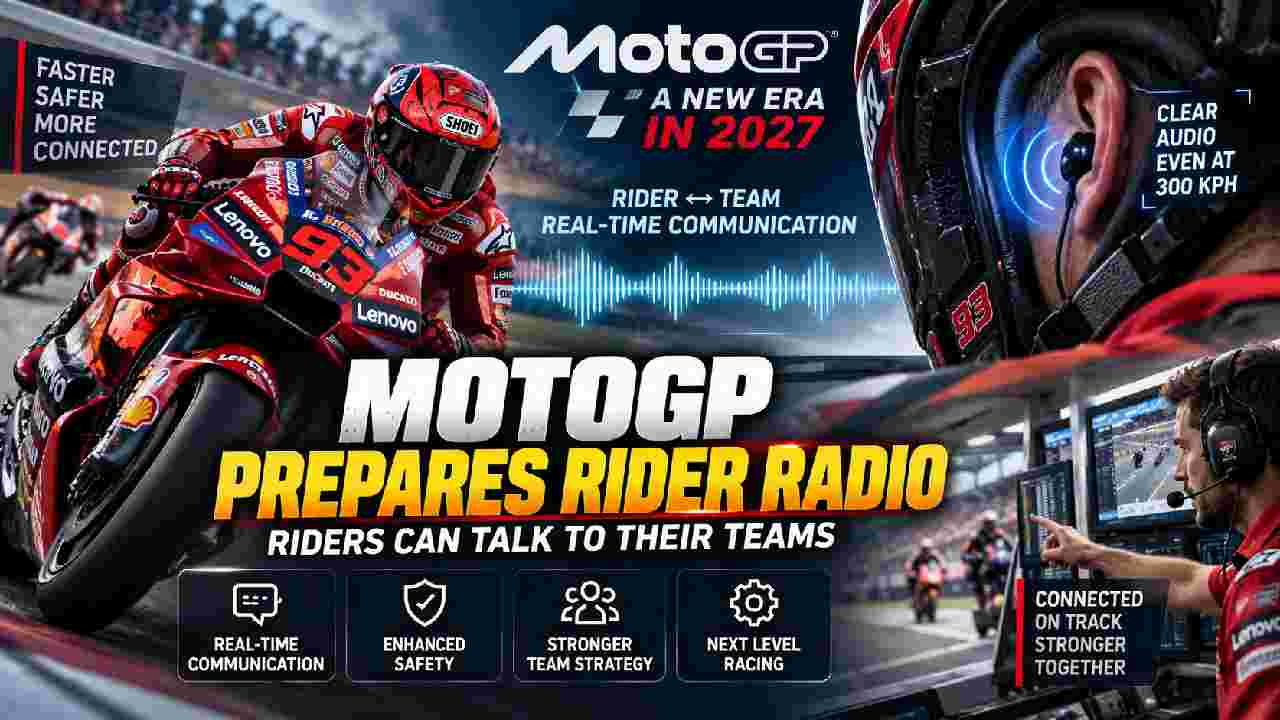
Ohana Magazine – MotoGP is preparing for a major technological shift in 2027, and the changes will go beyond motorcycles and technical regulations. A new MotoGP rider radio system is being developed to connect racers with their teams while they remain on track. Riders could eventually receive messages and speak directly with their crews without returning to the pit lane. The concept may sound familiar to Formula 1 fans, yet implementing it in motorcycle racing presents very different challenges. MotoGP riders travel at more than 300 kilometers per hour while surrounded by extreme engine noise and vibration. Therefore, every message must arrive clearly without distracting them from racing. Development has already taken more than six years. Above all, safety remains the project’s central purpose. If successful, the technology could fundamentally change how riders, teams, and Race Direction communicate during the most intense moments of a Grand Prix.
Six Years of Development Behind a Seemingly Simple Idea
The journey toward rider radio began around 2020. According to Sergi Sendra, Senior Director of Media Production Technology at MotoGP Group, Carlos Ezpeleta initially asked the technical team to explore whether riders could hear messages while riding. The idea appeared straightforward, but engineers quickly encountered several obstacles. They had to consider radio frequencies, signal coverage, hardware dimensions, and the location of equipment inside a rider’s racing suit. The transmitter needed to be small enough to fit around the aerodynamic hump while remaining reliable throughout a race. Moreover, engineers had to develop technology capable of functioning around a full MotoGP grid at racing speeds. These difficulties explain why the MotoGP rider radio system has required years rather than months of development. Every component must also work without compromising comfort or safety. In motorcycle racing, even a small distraction can become significant when riders are fighting for milliseconds.
Read More : Alexander Zverev Reaches US Ope
Custom Earpieces Could Make Every Rider More Comfortable
One of the most personal parts of the project emerged during the MotoGP Aragon weekend. Developers reportedly took ear impressions from at least 13 riders. These molds allow engineers to create communication devices tailored to each rider’s ear shape. That detail matters because racers must wear helmets for long periods while enduring intense heat, vibration, and physical movement. A poorly fitted device could become uncomfortable or even distracting at high speed. Consequently, engineers cannot simply place conventional earphones inside a racing helmet. The equipment needs to remain secure while delivering understandable audio in an extremely noisy environment. Personalized earpieces may therefore become a crucial element of the final system. This approach also shows how much engineering lies behind a feature that spectators may eventually take for granted. Before riders can comfortably talk with their crews, MotoGP must ensure that communication technology feels almost invisible while they are pushing their motorcycles to the limit.
Clear Messages at 300 Kph Present an Extraordinary Challenge
Communication becomes far more complicated when 22 motorcycles are racing at speeds above 300 kph. Engines produce enormous noise, while wind, vibration, and movement create additional interference. At the same time, riders cannot afford to lose concentration while braking or fighting for position. Therefore, engineers need to deliver short and understandable messages without noticeable delays. Reliability becomes even more important when several riders must receive identical information simultaneously. The technology cannot behave like an ordinary consumer radio system because racing conditions demand much higher consistency. MotoGP developers have consequently focused on a digital communication architecture capable of operating throughout the circuit. The challenge is not merely making a rider hear someone’s voice. Instead, engineers must ensure that the MotoGP rider radio system continues working at the exact moment when communication matters most. A delayed or unclear message could create confusion rather than improve safety, particularly during an emergency situation on track.
Read More : Former Heerenveen Boss
Red Flag Warnings Show Why Safety Comes First
The strongest argument for introducing radio communication involves emergency warnings. Race Direction sometimes needs every rider to receive critical information immediately, particularly when officials stop a session with a red flag. Traditionally, racers rely on marshal posts, illuminated panels, dashboard information, and other visual signals. Radio could add another direct layer of communication. Sendra explained that a message such as “Red Flag!” would need to reach every rider simultaneously and without delay. Achieving that level of synchronization requires digital audio transmission over IP rather than a conventional analog approach. The priority is clear: radio should strengthen safety before it becomes another strategic tool. A rider approaching a dangerous section of track could potentially receive vital information sooner. Nevertheless, the technology must remain dependable enough to earn trust from riders and officials. If the MotoGP rider radio system achieves that goal, its greatest contribution may come during moments when seconds can genuinely matter.
Two-Way Communication Could Change the Role of MotoGP Teams
The project becomes even more fascinating because MotoGP ultimately wants riders to communicate back to their teams. Two-way radio could create a completely different relationship between the pit wall and the rider during a race. A racer might report a technical problem, unusual tire behavior, or changing track conditions immediately instead of waiting until the session ends. Teams could also deliver important information more directly. However, that possibility raises questions about how much communication should be allowed. MotoGP has traditionally placed tremendous responsibility on riders to interpret conditions and manage races independently. Too much strategic guidance could alter that character. Therefore, regulators will need to balance technological benefits with the identity of motorcycle racing. Safety communication has an obvious purpose, while unrestricted tactical conversations would represent a much larger cultural change. The technology may be approaching readiness, but deciding how teams can use it could become just as important as developing the hardware itself.
The Sound of MotoGP Racing May Soon Include Another Voice
For decades, MotoGP riders have lived inside an intense world of engine noise, physical strain, instinct, and rapid decisions. Communication with their teams during races has remained limited compared with several other motorsport categories. The arrival of radio could quietly reshape that experience. From personalized earpieces to digital transmission, engineers are building a system designed around conditions that ordinary communication equipment would struggle to survive. Yet the project is not simply about adding another sophisticated gadget to modern motorcycles. It represents an attempt to connect riders with crucial information while they are most isolated from their teams. The planned 2027 changes could therefore mark an important step in MotoGP’s technological evolution. If two-way communication eventually becomes reliable and carefully regulated, riders may no longer face every racing situation alone. Amid the roar of motorcycles at more than 300 kph, a calm voice from the team could become part of Grand Prix racing.