Rupiah Exchange Rate Today: Dollar Remains Strong at Mandiri, BCA, and BNI
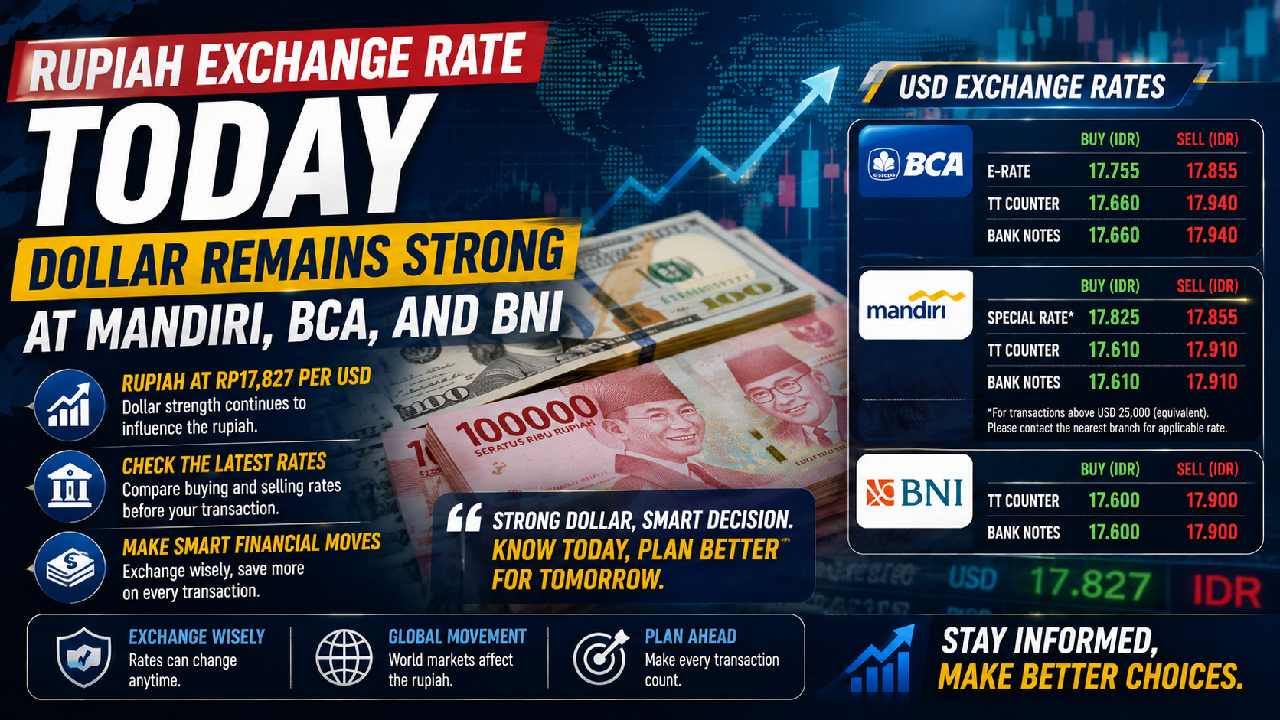
Ohana Magazine – The Rupiah exchange rate today remained under pressure against the US dollar on Saturday, August 15, 2026. Based on the figures provided, the rupiah stood at around Rp17,827 per US dollar at 10:17 a.m. WIB. The level shows that dollar strength continues to influence Indonesia’s currency market. Meanwhile, the Jakarta Composite Index closed the previous session 1.59 percent higher at 6,401.89. That contrast creates an interesting picture for investors. Domestic equities showed positive momentum, yet the currency still faced pressure from the greenback. For households and businesses, the exchange rate is more than a financial-market number. It can affect imported goods, overseas payments, travel costs, and business expenses. Therefore, understanding the different rates offered by major banks is important before exchanging money or completing international transactions.
BCA E-Rate Offers a Narrower Spread for Digital Transactions
BCA listed several exchange-rate categories, with different prices depending on the transaction method. Its e-Rate showed a buying rate of Rp17,755 and a selling rate of Rp17,855 per US dollar. Meanwhile, the TT Counter rate stood at Rp17,660 for buying and Rp17,940 for selling. The banknote rate carried the same figures as TT Counter. These differences matter because customers may receive a different rate depending on how they exchange their money. The Rupiah exchange rate today can also change while a transaction is being processed. BCA notes that e-Rate generally applies to transactions conducted through its electronic banking services. Certain large transactions may receive special arrangements through a branch. As a result, customers should check the effective exchange rate immediately before confirming a transaction rather than relying solely on an earlier quoted figure.
Read More : Russia Warns Japan of Dire Consequences as Kuril Islan
Bank Mandiri Shows Competitive Special Rates for Large Transactions
Bank Mandiri also offered several dollar exchange rates for customers on August 15. According to the supplied figures, its special rate placed the US dollar buying price at Rp17,825 and the selling price at Rp17,855. Its TT Counter rate was lower on the buying side at Rp17,610, while the selling rate reached Rp17,910. Banknotes carried the same Rp17,610 buying and Rp17,910 selling levels. However, the special rate comes with an important consideration. The quoted figure is an indicative rate for transactions above US$25,000 or an equivalent amount. Customers planning such transactions are advised to contact a branch for the applicable rate. Therefore, comparing the Rupiah exchange rate today requires more than looking for the lowest number. Transaction size, method, and timing can determine how much rupiah customers eventually pay or receive.
Why Buying and Selling Dollar Rates Are Always Different
For people who rarely exchange foreign currencies, the terms “buy” and “sell” can sometimes create confusion. A bank’s buying rate generally refers to the price the bank pays when purchasing US dollars from customers. Conversely, the selling rate represents the price customers pay when purchasing dollars from the bank. The gap between these figures is commonly called the spread. Looking at the Rupiah exchange rate today, that spread varies depending on the service and bank being used. Digital transactions can sometimes carry a narrower spread than over-the-counter exchanges because their operational structure differs. However, customers should still review the applicable terms before proceeding. The final rate may change during the transaction process. For individuals sending money abroad or businesses paying overseas suppliers, even a relatively small difference can become meaningful when the transaction involves a large amount of foreign currency.
Read More :Australian Police Investigate Mysterious Suitcase, Only to
Stronger Dollar Keeps Currency Market Participants Alert
The figures also illustrate how movements in the US dollar continue to shape Indonesia’s foreign-exchange environment. A rupiah level around Rp17,827 per dollar means businesses with dollar-denominated expenses need to watch currency movements carefully. Importers, travelers, students studying overseas, and companies paying international invoices may feel the impact directly. At the same time, exporters receiving revenue in US dollars can experience a different effect when converting their earnings into rupiah. This is why the Rupiah exchange rate today matters beyond trading screens. Currency movements eventually reach everyday financial decisions. Still, a single day’s rate should not automatically be treated as evidence of a long-term direction. Foreign-exchange markets can respond quickly to global interest-rate expectations, capital flows, economic data, and domestic sentiment. For that reason, businesses often monitor both current rates and broader economic conditions before making major currency transactions.
Different Banking Channels Can Produce Different Final Costs
Choosing where and how to exchange money can make a noticeable difference. BCA’s supplied e-Rate, for example, showed Rp17,855 per dollar on the selling side. Bank Mandiri’s special selling rate was also Rp17,855, although the transaction conditions differ. Their counter and banknote quotations showed other levels. Therefore, consumers should avoid comparing rates without checking which transaction category applies to them. The Rupiah exchange rate today displayed on a bank’s digital platform may not match the figure available at a physical counter. Furthermore, large transactions may qualify for individually quoted rates. Customers should also consider whether they need physical banknotes, account transfers, or digital foreign-exchange transactions. Each method serves a different purpose. A careful comparison can prevent unexpected costs, especially when exchanging substantial amounts. Ultimately, the most relevant rate is the one actually applied when the transaction is confirmed.
Rupiah Movements Remain Important for Indonesia’s Economic Outlook
The rupiah’s movement will remain closely watched because exchange rates connect domestic activity with developments in the global economy. For consumers, a weaker currency can increase the rupiah cost of some imported products and overseas expenses. For companies, currency fluctuations can influence production costs, pricing decisions, and financial planning. Meanwhile, investors often observe the rupiah alongside stock-market performance and broader economic indicators. The Rupiah exchange rate today therefore provides a useful snapshot, but it should be read within a wider context. The supplied data show the rupiah at Rp17,827 per US dollar while the previous session’s stock index recorded a solid gain. Such contrasting signals demonstrate that financial markets do not always move in the same direction. Anyone planning a foreign-currency transaction should check the latest bank quotation because exchange rates can change rapidly throughout the transaction process.