Nine-Story Building Collapse in the Philippines Leaves Families Waiting in Fear
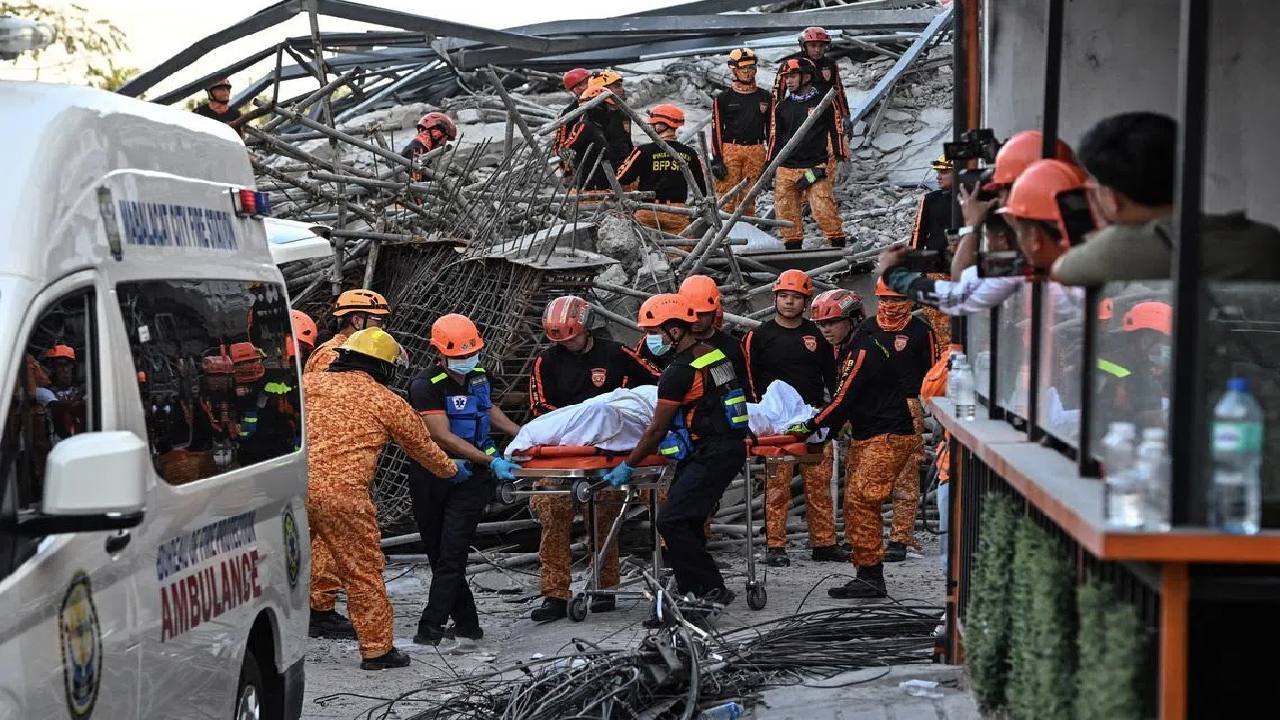
Ohana Magazine – A tragic building collapse in Philippines has left at least four people dead. Rescue teams are still searching for 17 missing victims trapped beneath the rubble. The disaster happened in Angeles City, north of Manila, where a nine-story building under construction suddenly collapsed and buried workers inside the structure. Emergency crews managed to rescue at least 26 survivors during the first phase of operations. However, the situation remains dangerous and emotionally exhausting for rescuers and families waiting nearby. Videos from the scene showed rescue workers carefully climbing unstable debris while search dogs moved through narrow spaces between concrete slabs. As the hours passed, fear and anxiety spread among relatives gathered outside the disaster area. Many families continue hoping for miracles while rescue teams struggle against unstable conditions and limited visibility inside the collapsed structure.
Rescue Teams Face Dangerous Conditions
Authorities explained that rescue operations inside the collapsed building remain extremely risky because even small movements can trigger additional collapses. According to officials from the Bureau of Fire Protection, emergency workers must move carefully while searching through unstable debris. Maria Leah Sajili, an information officer from the agency, said sudden shifts in concrete or steel could injure trapped victims and rescue personnel. Because of those dangers, teams currently rely heavily on manual rescue methods. They have not immediately deployed heavy machinery into the area. Rescue workers continue listening for sounds and checking narrow spaces for survivors. Specialized equipment also helps them search beneath the rubble carefully. The slow pace has frustrated some families, but officials insist caution remains necessary. Every decision made at the disaster site now balances urgency with the safety of survivors and emergency responders working in dangerous conditions.
Read More : A Ghost Town That Hides Invisible Poison: Thousands
Families Continue Waiting for News
Outside the disaster area in Angeles City, families gathered anxiously while waiting for updates about missing relatives. Some traveled long distances after hearing the devastating news. One woman named Lea Casilao reportedly came from Manila searching for information about her husband, who worked as a construction laborer at the site. Like many others, she only wanted regular updates and reassurance that rescue efforts continued actively. Emotional scenes unfolded as worried relatives watched emergency teams work through the dangerous debris field hour after hour. Some family members prayed together quietly, while others struggled to hold back tears during interviews with journalists. The uncertainty surrounding missing victims has become one of the most painful parts of the tragedy. As rescue operations continue, hope remains alive for many families, even though officials admit the chances of finding more survivors decrease gradually over time.
Thermal Detectors Help Search Operations
Rescue officials in Philippines have now started using thermal detection equipment to identify signs of life beneath the collapsed building. According to reports from journalists at the scene, emergency crews continue scanning the rubble carefully for body heat or movement. These advanced tools may help rescuers locate trapped victims hidden deep inside areas unreachable by manual search teams. However, officials warned that time remains a major challenge. Survivors trapped under heavy debris face serious risks from dehydration, injuries, and limited oxygen. If rescue teams fail to detect additional signs of life, authorities may eventually begin using heavy equipment such as excavators to remove larger sections of debris. That decision carries emotional weight because it often signals a shift from rescue operations toward recovery efforts. For now, emergency crews continue focusing on saving lives while hope still exists at the disaster site.
Read More :UK and Australia Push Stricter Social Media Rules to
Questions About Construction Safety Are Growing
As the tragedy continues dominating headlines in Philippines, questions regarding construction safety standards have started growing louder among the public. Many people now wonder whether structural weaknesses, poor supervision, or safety violations contributed to the collapse. Authorities have not yet released official conclusions because investigations remain ongoing. However, building accidents involving construction sites often trigger broader concerns about worker protection and infrastructure oversight. Construction workers in many countries frequently face dangerous conditions while supporting rapid urban development projects. For families affected by the collapse, those discussions feel deeply personal because behind every statistic stands a worker with dreams and loved ones waiting at home. Experts believe future investigations will likely examine the building’s design, materials, permits, and construction process carefully. The tragedy now serves as another painful reminder of how important workplace safety remains within growing urban environments.
The Community Is United by Grief
The collapse has deeply shaken residents in Angeles City because construction projects often symbolize economic growth and opportunity. Instead, this unfinished building suddenly became the center of fear, grief, and uncertainty. Many local residents expressed sympathy for the workers and families affected by the disaster. Nearby communities also started organizing food, water, and emotional support for relatives waiting outside the rescue zone. Social media across the Philippines filled with prayers, condolences, and encouraging messages for rescue workers. In moments like this, communities often reveal their emotional strength despite overwhelming tragedy. Although fear and sadness continue surrounding the disaster site, acts of compassion from volunteers and ordinary citizens have helped families feel less alone during the painful waiting process. The emotional impact of the collapse will likely remain within the community long after rescue operations finally end.
Rescue Workers Carry Heavy Emotional Pressure
For rescue workers operating inside the dangerous debris field, the mission involves more than physical exhaustion. Every movement inside the collapsed building could determine whether trapped victims survive or whether additional collapses occur. Emergency crews must constantly balance speed with caution while desperate families wait nearby for answers. Many rescuers reportedly continue working for long hours despite unstable conditions and emotional stress. Situations like this often leave deep psychological impacts on first responders because they witness both survival and loss directly. The collapse in Angeles City has become more than a construction accident because it now represents a human tragedy affecting workers, families, and the wider community. While heavy machinery and technology support the operation, the rescue effort still depends heavily on human courage, patience, and determination during one of the city’s darkest moments this year.