Hundreds of Venomous Snakes Invade Chinese City After Floods Devastate Reptile Breeding Center
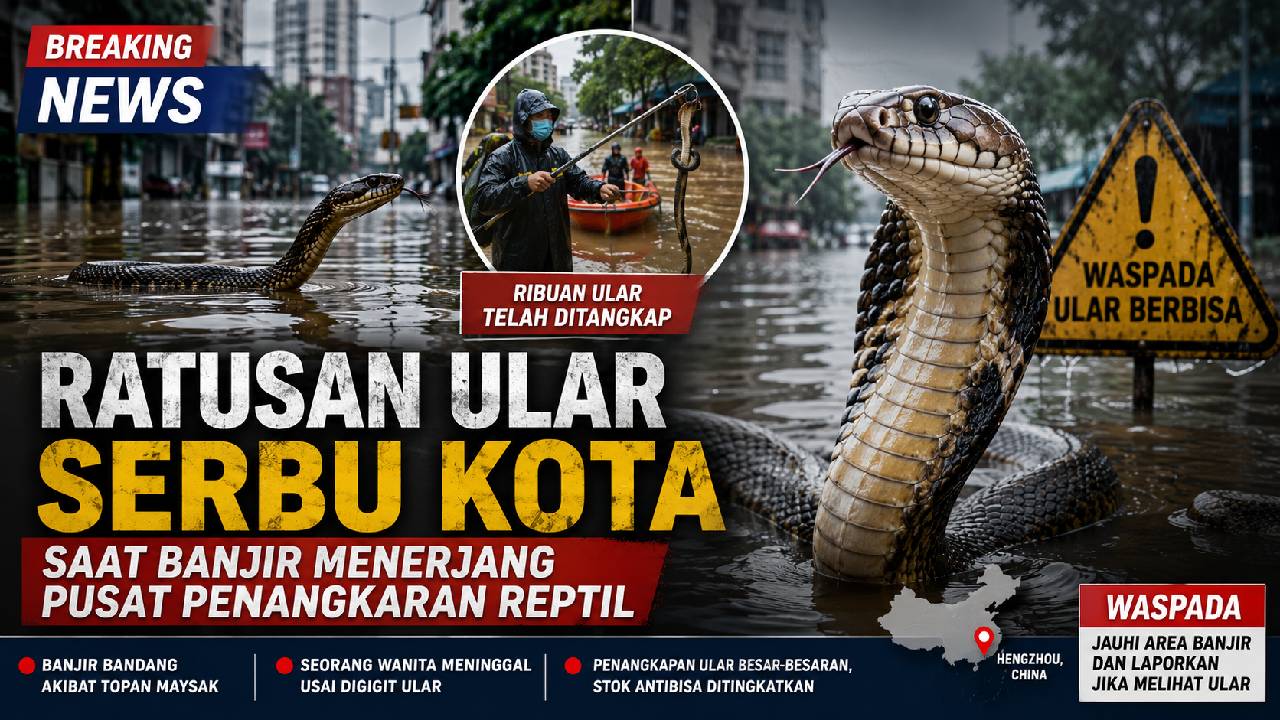
Ohana Magazine – The aftermath of Typhoon Maysak has left southern China facing an unusual disaster. While floodwaters caused widespread destruction, another unexpected danger emerged when hundreds of snakes escaped from reptile breeding facilities and spread across residential areas. Authorities have since launched emergency operations to protect residents, while local communities remain on high alert as rescue teams continue searching for the escaped reptiles.
Floodwaters Trigger a Dangerous Snake Escape Across Hengzhou
Severe flooding caused by Typhoon Maysak transformed the city of Hengzhou into the center of an unexpected wildlife emergency. As heavy rain overwhelmed rivers and reptile breeding centers, hundreds of snakes escaped into nearby neighborhoods. Many of the reptiles were venomous, creating serious safety concerns for residents already struggling with flood damage. Furthermore, videos shared online showed snakes swimming through flooded streets with their heads raised above the water. The shocking scenes quickly spread across social media and attracted nationwide attention. Initially, local officials believed the situation could be controlled easily. However, reports of snake encounters continued to increase. As a result, authorities upgraded their emergency response and urged villagers to avoid handling any reptiles they discovered during the cleanup process.
Read More : Venezuela Urges UK to Release 31 Tons
Fatal Snakebite Highlights the Growing Public Safety Risk
The growing crisis turned tragic after a woman reportedly died following a snakebite believed to have come from one of the escaped reptiles. In addition, state media reported several other bite victims who required immediate medical treatment. Consequently, health authorities recognized that the flooding had created more than just infrastructure damage. Hospitals began preparing for additional emergencies by increasing supplies of antivenom and coordinating with emergency responders. Meanwhile, doctors reminded residents to seek medical attention immediately after any suspected snakebite, even if symptoms initially appeared mild. Public health officials also encouraged people to wear protective boots and avoid entering standing floodwater whenever possible. These measures became increasingly important as search teams continued recovering escaped snakes from residential communities.
Massive Capture Operation Removes Thousands of Escaped Reptiles
Civilian snake-catching teams immediately organized large-scale operations throughout Hengzhou after reports of escaped reptiles multiplied. According to team member Zhu, groups of seven to eight trained catchers worked almost continuously for two days. During that period, they successfully captured between 2,000 and 3,000 snakes. Surprisingly, the final number exceeded early estimates of escaped reptiles, especially rat snakes. Moreover, flood conditions forced many snakes to hide inside homes, storage buildings, and dark corners where they searched for shelter. Residents played an essential role by reporting sightings to emergency teams instead of attempting dangerous rescues themselves. After capture, wildlife professionals carefully transported the snakes to appropriate natural habitats where they could be safely released away from populated communities.
Read More :Superyacht Allegedly Linked to Putin
Authorities Strengthen Emergency Measures Across the Flood Zone
As the scale of the incident became clearer, Chinese authorities expanded emergency operations throughout the affected region. First, additional snake-catching specialists were deployed to villages experiencing repeated sightings. Next, hospitals received larger supplies of antivenom to prepare for possible increases in snakebite cases. At the same time, local governments issued repeated public warnings through television broadcasts, online platforms, and community announcements. Officials specifically advised residents to avoid abandoned buildings, piles of debris, and flooded vegetation where snakes could remain hidden. Furthermore, emergency responders inspected shelters and temporary housing areas to ensure displaced families stayed protected. These coordinated actions demonstrated how disaster response must quickly adapt when natural disasters create unexpected threats involving wildlife.
Flooding Also Released Zoo Animals Into Nearby Communities
The escaped snakes were not the only animals roaming freely after the floodwaters swept across the region. According to emergency notices, several zoo animals also escaped after flood damage affected local enclosures. The list included two zebras, one ox, three ponies, and two donkeys. Although these animals are generally less dangerous than venomous snakes, frightened wildlife can behave unpredictably under stressful conditions. Therefore, Guigang Zoo issued an emergency public advisory requesting residents to report sightings immediately rather than approaching the animals. Wildlife officers then coordinated safe recovery efforts using trained personnel and specialized equipment. Fortunately, the rapid communication between residents and rescue teams helped reduce the risk of injuries while improving the chances of safely returning the escaped animals.
Extreme Weather Creates New Challenges for Wildlife and Communities
The Hengzhou incident demonstrates how extreme weather events can create unexpected emergencies that extend far beyond flooding itself. Climate-related disasters increasingly affect wildlife facilities, farms, and breeding centers located near vulnerable waterways. Consequently, emergency planners now face additional responsibilities that include protecting both people and displaced animals. Experts explain that floods often force reptiles and other wildlife to seek higher ground, which frequently brings them into direct contact with residential neighborhoods. Therefore, communities living near breeding farms or zoos should understand emergency safety procedures before disasters occur. The events in southern China also highlight the importance of coordinated rescue operations, public awareness campaigns, and rapid medical preparedness whenever severe flooding disrupts both human infrastructure and surrounding ecosystems.