Gold Prices Surge as Oil Pressure Eases, Ending Losing Streak
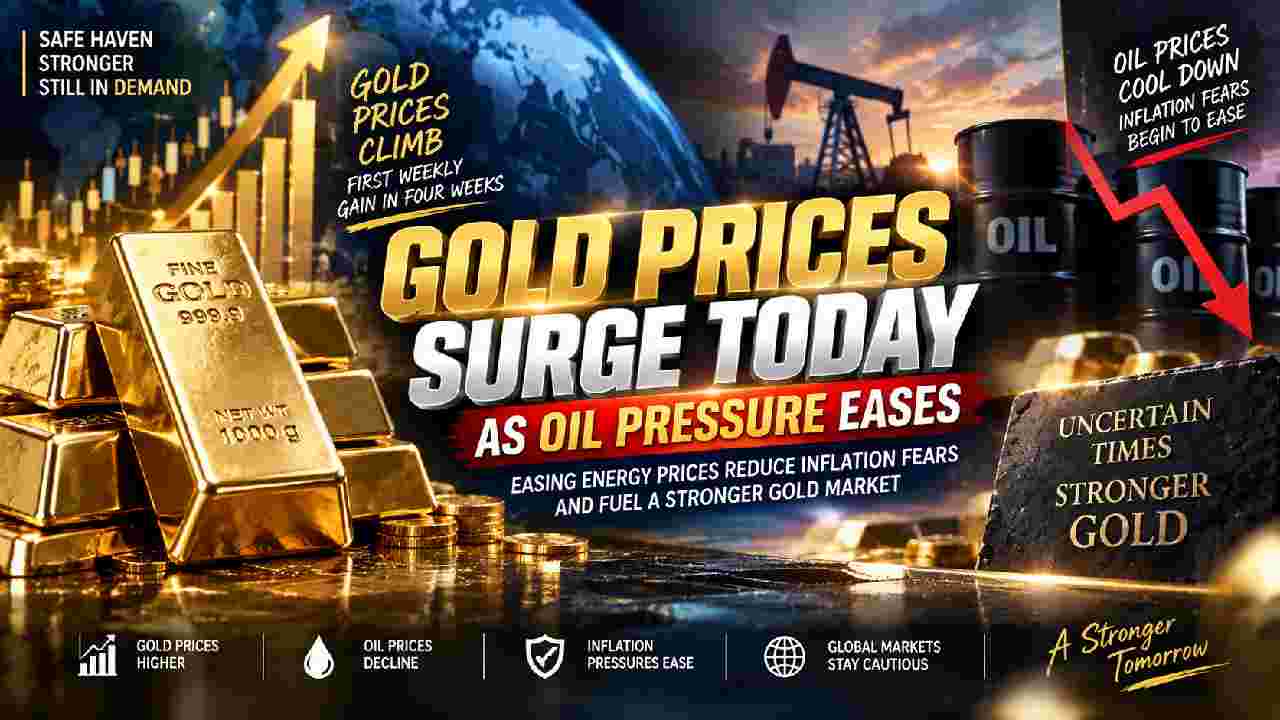
Ohana Magazine – Gold Prices Rise Today as the global bullion market finds fresh momentum after several difficult weeks. Spot gold climbed 0.3% to $4,352.39 per ounce on Friday, September 18, after reaching its highest level since September 11 during the previous session. More importantly, gold gained about 0.2% for the week. That performance put the precious metal on track for its first weekly increase in four weeks. Meanwhile, gold futures slipped slightly by 0.2% to $4,390.30. The recovery came as lower oil prices reduced some concerns about persistent inflation. As a result, investors began reassessing positions that had previously reflected expectations for tighter monetary policy. However, the rebound was not completely free from pressure. A stronger U.S. dollar continued to limit gold’s advance. Therefore, the market entered the weekend with renewed optimism, although several major economic risks remained firmly in focus.
Falling Oil Prices Give Gold Market Fresh Support
Oil became an important part of gold’s latest recovery. Brent crude fell for a third consecutive session as concerns about supply disruptions from Saudi Arabia eased. Consequently, investors saw less immediate pressure from energy-driven inflation. Chris Gaffney, President of World Markets at EverBank, explained that lower oil prices can reduce broader inflation pressure because energy costs influence prices throughout the economy. Previously, some precious-metals investors had expected higher U.S. interest rates and built short positions around the possibility of weaker gold prices. However, the shift in oil prices encouraged some traders to close those positions quickly. This helped provide additional support for bullion. Even so, the situation remains fragile. Risks of supply shocks linked to tensions in the Middle East have not disappeared. Therefore, gold traders still face two competing forces: easing energy prices on one side and geopolitical uncertainty on the other. That balance could continue shaping short-term market sentiment.
Read More : A Billionaire’s Humbling Experiment: Spending a Day on Mumbai’s Streets as a Beggar
Stronger Dollar Keeps the Gold Rally Under Control
Although gold moved higher, the U.S. dollar prevented the rally from gaining even greater momentum. The dollar climbed to its strongest level in more than seven weeks. Since international gold prices are commonly quoted in dollars, a stronger U.S. currency can make bullion more expensive for buyers using other currencies. As a result, international demand can face additional pressure when the dollar rises sharply. Still, gold managed to advance despite that obstacle. This suggests investors were also responding to changing inflation expectations and adjustments in market positions. Meanwhile, gold continues to play several roles for investors. Some view it as protection during economic uncertainty, while others use it as a hedge against inflation or geopolitical risk. However, currency movements can quickly change its appeal. Therefore, traders are closely watching whether the dollar maintains its recent strength. A further rise could restrict bullion, while weaker currency pressure could give gold more room to extend its recovery.
Federal Reserve Rate Outlook Remains a Major Test
Interest rates remain one of the biggest forces influencing the gold market. The Federal Reserve raised its benchmark rate by 25 basis points to a range of 3.75%–4% on Wednesday. Moreover, the central bank signaled that additional increases could follow in the coming months. According to the supplied report, markets were pricing in a 58% chance of another rate increase when policymakers meet again in October. This matters because gold does not provide regular interest income. Therefore, higher rates can make yield-bearing assets more attractive compared with bullion. At the same time, gold has traditionally attracted investors who want protection from inflation and uncertainty. These competing forces create a difficult environment for traders. Lower oil prices may ease inflation concerns, yet tighter monetary policy can still weigh on demand. Consequently, investors are watching upcoming economic data closely. Any shift in expectations for Federal Reserve policy could quickly influence gold prices again.
Read More : Historic Bangsamoro Election Moves Forward Under Tight Security
Global Central Bank Moves Add Another Layer of Pressure
The Federal Reserve is not the only central bank shaping the environment for precious metals. According to the supplied material, the Bank of Japan also raised interest rates to their highest level in 31 years. In addition, policymakers signaled that borrowing costs could rise further. Such moves matter because gold trades within a global financial system where interest rates influence currencies, bonds, and investment flows. When major economies offer higher returns on interest-bearing assets, some investors may become less willing to hold non-yielding bullion. However, gold can still attract demand when financial uncertainty grows. Therefore, investors must weigh monetary tightening against inflation risks and geopolitical concerns. The interaction between these factors makes the current market particularly sensitive to new information. Meanwhile, movements in the dollar and other major currencies can amplify price changes. For gold buyers, the coming weeks may therefore depend less on one headline and more on how global monetary policy develops across several major economies.
Asian Physical Gold Demand Sends Mixed Signals
Physical demand across Asia provides another important piece of the gold market story. In India, buyers remained relatively cautious during the week. According to the supplied report, some consumers delayed purchases while waiting for lower prices. That hesitation illustrates how record or elevated prices can affect traditional physical demand, even when investment interest remains strong elsewhere. Meanwhile, premiums in China remained stable, supported by firm investment demand. The difference between the two major markets shows that gold buyers do not always respond to price movements in the same way. Consumer purchases, investment demand, local currency conditions, and expectations for future prices can all influence behavior. Therefore, traders often monitor Asian markets alongside developments in the United States and Europe. Strong investment demand can support prices, while weaker jewelry or physical purchases may limit momentum. This mixed picture adds another layer of uncertainty as gold attempts to build on its first weekly gain in four weeks.
Gold Approaches a Crucial Resistance Zone Near $4,400
After recovering during the week, gold is approaching a technical area that could determine its next significant move. Gaffney identified resistance around $4,400 to $4,440 per ounce. A sustained move above that zone could create room for additional gains. However, resistance levels do not guarantee that prices will move in either direction. Instead, they represent areas where selling pressure may become stronger based on previous market behavior. Several forces could influence whether gold breaks higher. Lower oil prices may continue easing inflation fears, while geopolitical risks could maintain demand for defensive assets. Conversely, a stronger dollar and expectations for additional interest-rate increases may restrict momentum. Therefore, investors are likely to watch economic data, energy markets, central bank signals, and currency movements together. Gold has finally interrupted a three-week losing run, but its next direction remains sensitive to rapidly changing conditions across global markets.